Ruinart
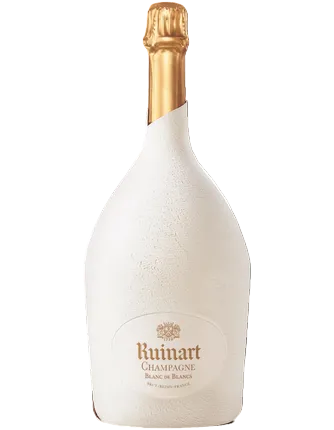
Ruinart Blanc de Blancs Second Skin NV Champagne | 94 Points
Ruinart Blanc de Blancs Second Skin NV Champagne | 94 Points
Couldn't load pickup availability
94 POINTS WINE ENTHUSIAST! 93 POINTS JAMESSUCKLING.COM! 93 POINTS WINE SPECTATOR! THE WORLD'S OLDEST CHAMPAGNE HOUSE! ESTABLISHED IN 1729! 100% CHARDONNAY! 25–30 DIFFERENT CHARDONNAY CRUS! UP TO 30% RESERVE WINES! REVOLUTIONARY SECOND SKIN PACKAGING! THE MAGNIFICENT RUINART BLANC DE BLANCS NV – RRP $250!
94 Points – Wine Enthusiast | 93 Points – JamesSuckling.com | 93 Points – Wine Spectator
Ruinart Blanc de Blancs Second Skin NV Champagne – Champagne, France
RRP $250 per bottle
NOW HERE IS ONE OF THE MOST ICONIC BLANC DE BLANCS CHAMPAGNES IN THE WORLD!
There are Champagne houses that produce magnificent Chardonnay-based Champagnes.
There are Champagne houses that specialise in Blanc de Blancs.
And then there is a Champagne house whose entire identity has been built around the extraordinary qualities of Chardonnay.
RUINART!
The world's oldest established Champagne house.
Established in 1729.
Nearly three centuries of extraordinary winemaking heritage.
A remarkable understanding of Champagne's greatest Chardonnay terroirs.
And a reputation for producing some of the most elegant, beautifully textured and sophisticated Champagnes in France.
If you want to understand what makes Ruinart so special, there is one Champagne that you absolutely need to experience.
RUINART BLANC DE BLANCS!
This is the signature Champagne of Maison Ruinart.
And just look at the pedigree behind this extraordinary wine.
THE WORLD'S OLDEST CHAMPAGNE HOUSE!
ESTABLISHED IN 1729!
100% CHARDONNAY!
25–30 DIFFERENT CHARDONNAY CRUS!
A STRONG EMPHASIS ON PREMIER CRU VINEYARDS!
CÔTE DES BLANCS!
MONTAGNE DE REIMS!
CÔTE DE SÉZANNE!
VALLÉE DE LA VESLE!
20–30% RESERVE WINES!
TWO TO THREE YEARS OF CELLAR MATURATION!
HISTORIC UNESCO WORLD HERITAGE CHALK CELLARS!
JUST 7 GRAMS PER LITRE DOSAGE!
94 POINTS WINE ENTHUSIAST!
93 POINTS JAMESSUCKLING.COM!
93 POINTS WINE SPECTATOR!
REVOLUTIONARY SECOND SKIN PACKAGING!
Think beautifully ripe lemon.
White peach.
Fresh pear.
Nectarine.
White flowers.
Fresh almonds.
Pineapple.
Delicate ginger.
Pink peppercorns.
And beautifully refined chalky minerality.
The palate is wonderfully expressive.
Creamy.
Precise.
Textural.
Elegant.
Yet possesses the vibrant freshness and extraordinary finesse that make great Blanc de Blancs Champagne so captivating.
THIS IS THE SIGNATURE CHAMPAGNE FROM THE WORLD'S OLDEST CHAMPAGNE HOUSE – A MAGNIFICENT CELEBRATION OF CHARDONNAY!
Ruinart – The Champagne House That Started It All
Now here's where the story becomes particularly fascinating.
1729!
To appreciate the extraordinary heritage of Ruinart, consider when some of Champagne's other legendary houses were established.
Moët & Chandon – 1743.
Veuve Clicquot – 1772.
Louis Roederer – 1776.
Billecart-Salmon – 1818.
Bollinger – 1829.
Krug – 1843.
But before all of them?
RUINART!
On 1 September 1729, Nicolas Ruinart established what is recognised as the world's first Champagne house.
Originally involved in the textile trade, Nicolas recognised the extraordinary potential of sparkling Champagne.
Initially, bottles were distributed as gifts to customers of the family's textile business.
However, the popularity of the Champagne grew to such an extent that wine eventually became the family's principal commercial activity.
What began as an entrepreneurial venture became one of the most prestigious names in the history of Champagne.
Today, Maison Ruinart forms part of the prestigious LVMH luxury group.
But what makes Ruinart particularly fascinating is that it has developed an identity entirely its own.
Rather than attempting to produce the most powerful or richest expressions of Champagne, Ruinart has become synonymous with elegance, aromatic purity and the extraordinary qualities of Chardonnay.
THE WORLD'S OLDEST CHAMPAGNE HOUSE. NEARLY THREE CENTURIES OF HERITAGE. ONE UNMISTAKABLE WINEMAKING PHILOSOPHY!
Dom Thierry Ruinart – The Benedictine Monk Who Inspired a Champagne Dynasty
Now here's another extraordinary part of the Ruinart story.
DOM THIERRY RUINART!
Born in 1657, Thierry Ruinart was a Benedictine monk and scholar who spent considerable time in Paris.
During his lifetime, he observed the growing fascination with sparkling Champagne among influential French society.
He recognised the extraordinary potential of these wines and communicated his enthusiasm to his family.
His nephew, Nicolas Ruinart, would eventually bring that vision to life by establishing Maison Ruinart in 1729.
The importance of Thierry Ruinart remains central to the identity of the house today.
Ruinart's magnificent prestige cuvée, Dom Ruinart, bears his name.
A tribute to the man whose vision helped inspire the establishment of the world's oldest Champagne house.
A REMARKABLE STORY THAT BEGAN WITH A BENEDICTINE MONK AND WOULD HELP CHANGE THE HISTORY OF CHAMPAGNE FOREVER!
Chardonnay – The Heart and Soul of Maison Ruinart
Now here's what really distinguishes Ruinart from so many other historic Champagne houses.
CHARDONNAY!
While houses such as Bollinger and Krug have traditionally been celebrated for the structural contribution of Pinot Noir, Ruinart has established its identity around the elegance and aromatic finesse of Chardonnay.
Chardonnay plays an important role throughout the Ruinart portfolio.
But nowhere is that philosophy more apparent than in the magnificent Blanc de Blancs.
100% CHARDONNAY!
No Pinot Noir.
No Meunier.
Just Chardonnay sourced from a fascinating diversity of Champagne terroirs.
For anyone who loves great white Burgundy, the attraction of Blanc de Blancs Champagne is particularly interesting.
The same grape variety.
The influence of limestone and chalk-rich soils.
The importance of vineyard origin.
The preservation of natural acidity.
And the extraordinary textural complexity that Chardonnay can develop through extended maturation.
Champagne adds another dimension through secondary fermentation in bottle and prolonged contact with the yeast lees.
The result can be an extraordinary combination of fruit purity, aromatic sophistication, creamy texture and mineral freshness.
CHARDONNAY IN ONE OF ITS MOST ELEGANT AND SOPHISTICATED FORMS!
What Does Blanc de Blancs Actually Mean?
Blanc de Blancs translates literally as white from whites.
In Champagne, the term generally refers to a white Champagne produced entirely from Chardonnay, although other permitted white grape varieties can also be used.
Most traditional non-vintage Champagnes are blends of Chardonnay, Pinot Noir and Meunier.
Each variety contributes different characteristics.
Pinot Noir provides structure and concentration.
Meunier provides generosity and fruit expression.
Chardonnay provides freshness, aromatic finesse and precision.
By working exclusively with Chardonnay, Ruinart must achieve the desired depth, texture and complexity through the selection of vineyard origins, reserve wines and maturation techniques.
There is no Pinot Noir to provide additional structural weight.
No Meunier to provide extra roundness.
Everything comes from Chardonnay.
That is what makes the selection of fruit and the blending process so fascinating.
ONE GRAPE VARIETY. NUMEROUS TERROIRS. EXTRAORDINARY COMPLEXITY!
25–30 Different Chardonnay Crus – The Extraordinary Art of Blending
Now here's one of the most fascinating aspects of Ruinart Blanc de Blancs.
25–30 DIFFERENT CHARDONNAY CRUS!
Rather than relying on Chardonnay from a single village or region, Ruinart combines wines from numerous origins across Champagne.
The principal sources include four important areas.
CÔTE DES BLANCS!
MONTAGNE DE REIMS!
CÔTE DE SÉZANNE!
VALLÉE DE LA VESLE!
Each area contributes something different to the final blend.
Different soil compositions.
Different vineyard exposures.
Different mesoclimates.
Different ripening characteristics.
Different expressions of acidity, fruit and texture.
The term cru in Champagne traditionally identifies a winegrowing village or commune rather than an individual vineyard.
By working with Chardonnay from approximately 25–30 different crus, Ruinart has access to an exceptionally diverse range of blending components.
The artistry lies in bringing together the distinctive characteristics of these wines without losing the purity of Chardonnay.
25–30 DIFFERENT INTERPRETATIONS OF CHARDONNAY BROUGHT TOGETHER IN ONE BEAUTIFULLY HARMONIOUS CHAMPAGNE!
Côte des Blancs – The Spiritual Home of Champagne Chardonnay
For anyone who loves Blanc de Blancs Champagne, there are few wine regions in the world more exciting than the Côte des Blancs.
This extraordinary stretch of Champagne is home to some of the world's most celebrated Chardonnay villages.
AVIZE!
CRAMANT!
LE MESNIL-SUR-OGER!
OGER!
CHOUILLY!
OIRY!
These legendary Grand Cru villages have helped establish the international reputation of Chardonnay from Champagne.
The defining geological characteristic of the region is its extraordinary chalk-rich subsoil.
Formed from ancient marine deposits, chalk provides excellent drainage while retaining moisture within its porous structure.
This helps vines navigate variations in seasonal rainfall.
The region's relatively cool climate also encourages the preservation of acidity.
The resulting wines can display extraordinary finesse.
Think lemon.
Lime.
White flowers.
Green apple.
Delicate stone fruit.
And beautifully restrained mineral characteristics.
Ruinart draws extensively on the Chardonnay traditions of this region, with Premier Cru fruit playing an important role in its non-vintage Blanc de Blancs.
The Côte des Blancs provides an essential component of the Champagne's classic structure and elegant identity.
ONE OF THE WORLD'S GREATEST CHARDONNAY TERROIRS – THE EXTRAORDINARY CÔTE DES BLANCS!
Montagne de Reims – More Than Simply Pinot Noir Country
Now here's something particularly interesting.
Most Champagne enthusiasts associate the Montagne de Reims with magnificent Pinot Noir.
Villages such as Ambonnay, Bouzy, Verzenay and Verzy are celebrated internationally for their powerful and beautifully structured wines.
However, the Montagne de Reims also produces some outstanding Chardonnay.
Villages such as Villers-Marmery, Trépail and other Chardonnay-growing areas demonstrate an entirely different side of the region.
Chardonnay from these sites can possess a fascinating combination of citrus freshness, floral perfume and structural definition.
The distinct vineyard exposures and local climatic conditions provide characteristics that complement Chardonnay from the Côte des Blancs.
For a Champagne house that specialises in Chardonnay, access to these different expressions is particularly valuable.
The Montagne de Reims contributes an additional dimension of complexity to the Ruinart Blanc de Blancs blend.
A REGION FAMOUS FOR PINOT NOIR THAT ALSO PRODUCES SOME EXTRAORDINARILY INTERESTING CHARDONNAY!
Côte de Sézanne – The Secret Behind Ruinart's Beautiful Fruit Generosity
Now here's where things become particularly fascinating.
THE CÔTE DE SÉZANNE!
Situated to the southwest of the Côte des Blancs, the Côte de Sézanne is another important Chardonnay-producing area of Champagne.
While it receives considerably less international attention than the famous Grand Cru villages of the Côte des Blancs, the region produces some wonderfully expressive Chardonnay.
Its relatively warmer conditions and diverse soil compositions can encourage a more generous fruit profile.
Think ripe citrus.
Grapefruit.
White peach.
Nectarine.
And delicate tropical fruit characteristics.
These wines can provide an attractive contrast to the more linear and tightly structured expressions of Chardonnay found elsewhere in Champagne.
Their contribution to the Ruinart blend is particularly important.
Ruinart Blanc de Blancs is not designed to be a relentlessly austere or sharply acidic Champagne.
It possesses beautiful freshness, but also an extraordinarily appealing roundness.
The Chardonnay sourced from the Sézannais helps contribute to that generous personality.
FRESHNESS WITHOUT AUSTERITY. GENEROSITY WITHOUT HEAVINESS. THE BEAUTIFUL BALANCE OF RUINART!
Vallée de la Vesle – Adding Another Layer of Freshness
The vineyards around the Vesle Valley provide another interesting component of the Ruinart blend.
Situated around the northern parts of the Montagne de Reims and near Reims itself, the area offers additional diversity in terms of vineyard conditions and Chardonnay expression.
Wines from the northern Vesle Valley can contribute freshness, lightness and delicate aromatic characteristics.
Their inclusion demonstrates the extraordinary level of detail involved in constructing the Ruinart house style.
The objective is not simply to combine wines from famous vineyards.
It is to identify individual characteristics that improve the overall balance of the Champagne.
A little additional freshness.
A little more aromatic lift.
A little greater precision through the finish.
These seemingly small contributions can make a remarkable difference to the finished wine.
FOUR DISTINCT CHARDONNAY-PRODUCING AREAS. ONE EXTRAORDINARILY ELEGANT CHAMPAGNE!
Premier Cru Chardonnay – Exploring Champagne's Vineyard Hierarchy
Another particularly interesting aspect of Ruinart Blanc de Blancs is the importance of Premier Cru Chardonnay within the blend.
Champagne's traditional vineyard classification recognises villages with established reputations for the quality of their grapes.
Grand Cru villages occupy the highest historical classification, followed by Premier Cru villages.
However, great Champagne is not determined by village classification alone.
Individual vineyard conditions.
Vineyard management.
Harvest decisions.
Winemaking techniques.
And the skill of the blending team are all critically important.
Ruinart's non-vintage Blanc de Blancs has traditionally drawn heavily on Premier Cru Chardonnay from the Côte des Blancs and Montagne de Reims, supported by wines from other areas.
The approach allows the house to achieve a beautifully balanced expression without being restricted to a single vineyard classification.
Its prestige Dom Ruinart Blanc de Blancs follows a more selective vintage-based philosophy, predominantly utilising Grand Cru Chardonnay.
Both approaches are fascinating.
One celebrates the diversity and consistency of a signature house style.
The other explores the exceptional qualities of an individual vintage.
20–30% Reserve Wines – Building Complexity and Texture
Now here's another important aspect of the Ruinart Blanc de Blancs philosophy.
20–30% RESERVE WINES!
One of the greatest skills in non-vintage Champagne production is the management of reserve wines.
Rather than constructing a Champagne entirely from the most recent harvest, the winemaker incorporates wines retained from previous years.
A cooler vintage might contribute particularly vibrant acidity and precision.
A warmer vintage might contribute more generous fruit and texture.
More developed reserve wines may introduce maturity and additional complexity.
The winemaking team must understand how all these components will interact, not only during the initial blending process but also following secondary fermentation and extended bottle maturation.
The result is a Champagne that expresses more than the characteristics of a single growing season.
It expresses the accumulated knowledge and style of the house.
Ruinart's Blanc de Blancs typically incorporates 20–30% reserve wines, although the proportion can be higher depending on the characteristics of a particular harvest.
For anyone who appreciates the complexity of great multi-vintage Champagne, this is a particularly important element.
UP TO 30% RESERVE WINES IN THE STANDARD BLEND – ADDITIONAL DEPTH, TEXTURAL COMPLEXITY AND BEAUTIFUL HARMONY!
Frédéric Panaïotis – The Extraordinary Cellar Master Behind Modern Ruinart
Now let's talk about one of the most influential figures in the modern history of Ruinart.
FRÉDÉRIC PANAÏOTIS!
Appointed Cellar Master of Maison Ruinart in 2007, Panaïotis played a significant role in developing and refining the contemporary identity of the house.
Before joining Ruinart, his winemaking career included experience in California, the Rhône Valley, Champagne and Roussillon, together with time working for Champagne's interprofessional organisation.
This provided him with an extensive understanding of different approaches to viticulture and winemaking.
His philosophy at Ruinart centred on refining the expression of Chardonnay.
Preserving aromatic purity.
Developing greater precision.
Understanding the individuality of different vineyard origins.
And ensuring that texture and freshness remain in beautiful balance.
One of the fascinating characteristics of Ruinart Blanc de Blancs is that it manages to deliver the precision of a serious Chardonnay-based Champagne without becoming excessively austere.
That balance reflects the philosophy that Panaïotis helped refine during his tenure.
His contribution remains an important part of the modern Ruinart story.
AN EXTRAORDINARY UNDERSTANDING OF CHARDONNAY, TERROIR AND THE ART OF CHAMPAGNE BLENDING!
Stainless Steel Fermentation – Preserving the Purity of Chardonnay
The winemaking behind Ruinart Blanc de Blancs is designed to protect the distinctive qualities of Chardonnay.
The grapes are harvested by hand.
Following careful pressing, the juice undergoes alcoholic fermentation in temperature-regulated stainless steel tanks.
The advantages of stainless steel are particularly important for this style of Champagne.
Precise fermentation temperature management.
Preservation of delicate fruit aromas.
Protection of floral characteristics.
And the avoidance of overt oak influence.
Rather than relying on barrel fermentation to create a particular flavour profile, Ruinart focuses on the natural expression of the fruit.
The beautiful citrus characteristics.
The white peach.
The fragrant flowers.
The delicate mineral nuances.
The texture and complexity are developed through blending, malolactic conversion, secondary fermentation and maturation.
NO OVERT OAK INFLUENCE – JUST BEAUTIFULLY PURE AND EXPRESSIVE CHARDONNAY!
Malolactic Fermentation – The Secret Behind the Beautifully Rounded Palate
Now here's another important winemaking detail.
MALOLACTIC FERMENTATION!
During this process, naturally occurring malic acid is converted into the softer lactic acid.
In Champagne, where the relatively cool growing conditions encourage high natural acidity, this technique can significantly influence the texture and balance of the finished wine.
Some Champagne producers deliberately prevent malolactic fermentation to retain a more angular, tightly structured expression.
Ruinart allows malolactic fermentation to take place.
The result is a Champagne that retains beautiful freshness but possesses a softer and more harmonious textural profile.
This is particularly apparent in the Blanc de Blancs.
The citrus freshness is there.
The fine acidity is there.
The beautiful Chardonnay precision is there.
But so is a wonderfully rounded and generous quality through the middle of the palate.
VIBRANT CHARDONNAY FRESHNESS COMBINED WITH BEAUTIFULLY INTEGRATED TEXTURE!
The Legendary Ruinart Crayères – UNESCO World Heritage Chalk Cellars
Now here's one of the most extraordinary aspects of the entire Ruinart story.
THE HISTORIC CRAYÈRES OF REIMS!
Beneath the city of Reims lies an extraordinary network of ancient chalk quarries.
Some of these magnificent underground chambers extend to depths approaching 40 metres.
The chalk was originally excavated for construction purposes, leaving behind spectacular subterranean spaces.
Ruinart recognised the extraordinary potential of these historic chambers for the maturation of Champagne.
Naturally cool temperatures.
High humidity.
Darkness.
And remarkably stable conditions throughout the year.
These are precisely the conditions that allow Champagne to develop slowly and harmoniously.
The historic Ruinart crayères form part of the Champagne heritage recognised by UNESCO in 2015.
These cellars are not simply a place to store bottles.
They are an extraordinary physical connection between the history, geology and winemaking traditions of Champagne.
The same remarkable chalk that helps define some of Champagne's greatest vineyards also provides the environment in which the wines mature.
FROM THE CHALK BENEATH THE VINES TO THE HISTORIC CHALK CELLARS – AN EXTRAORDINARY CONNECTION BETWEEN TERROIR AND WINEMAKING!
Two to Three Years of Cellar Maturation – Developing Beautiful Complexity
Now here's another important element of the Ruinart Blanc de Blancs style.
TWO TO THREE YEARS OF CELLAR MATURATION!
Following the secondary fermentation in bottle, the Champagne develops in contact with its yeast lees.
Over time, those yeast cells gradually break down through the process known as autolysis.
This can contribute a fascinating range of aromatic and textural characteristics.
Fresh bread.
Sourdough.
Brioche.
Almond pastry.
Biscuit.
Subtle toasted nuts.
And beautifully integrated creamy textures.
For Ruinart Blanc de Blancs, the objective is to balance these maturation-derived characteristics with the extraordinary freshness of Chardonnay.
The wine should retain the aromatic expression of ripe citrus and white stone fruit.
The floral perfume.
The refreshing acidity.
And the delicate mineral structure.
But the palate should also possess sophistication and generosity.
That balance is one of the defining characteristics of outstanding Blanc de Blancs Champagne.
BEAUTIFUL CHARDONNAY PURITY COMPLEMENTED BY THE TEXTURAL COMPLEXITY OF TRADITIONAL CHAMPAGNE MATURATION!
Just 7 Grams Per Litre Dosage – Beautifully Balanced Brut Champagne
Now let's talk about another detail that serious Champagne enthusiasts will appreciate.
JUST 7 GRAMS PER LITRE DOSAGE!
Dosage is the final addition made following disgorgement to help determine the balance of the finished Champagne.
Ruinart Blanc de Blancs is classified as Brut.
The house's standard dosage is currently approximately 7 g/L.
The objective is to balance the natural acidity of Chardonnay without overwhelming its individual characteristics.
The citrus freshness remains apparent.
The mineral nuances remain beautifully expressive.
The white-fruit characteristics retain their purity.
And the finish remains wonderfully refreshing.
For customers who appreciate elegant, dry Champagne but prefer something with a little more generosity than the most austere zero-dosage wines, Ruinart Blanc de Blancs offers a particularly appealing balance.
BEAUTIFULLY DRY. CREAMY. PRECISE. GENEROUS. EXTRAORDINARILY ELEGANT!
Second Skin – One of the Most Innovative Packaging Designs in Champagne
Now here's something that makes this particular presentation of Ruinart Blanc de Blancs even more fascinating.
THE REVOLUTIONARY SECOND SKIN CASE!
In 2020, Maison Ruinart introduced a completely different approach to Champagne gift packaging.
Rather than relying on the traditional rigid presentation box, Ruinart developed an exceptionally lightweight protective case moulded around the distinctive shape of its bottle.
The design was inspired by the white chalk surfaces of the historic Ruinart crayères.
The result is beautifully minimalist.
An elegant white exterior.
A distinctive sculptural shape.
And a wonderfully understated luxury presentation.
But this is about much more than appearance.
According to Maison Ruinart, the Second Skin case delivers some particularly impressive environmental improvements.
NINE TIMES LIGHTER THAN THE PREVIOUS PRESENTATION BOX!
A 60% REDUCTION IN THE CARBON FOOTPRINT OF THE PACKAGING!
RECYCLABLE PAPER-BASED CONSTRUCTION!
DESIGNED TO PROTECT THE CHAMPAGNE FROM EXPOSURE TO LIGHT!
SUITABLE FOR REFRIGERATOR AND CELLAR STORAGE!
DESIGNED TO WITHSTAND THE HUMID CONDITIONS OF AN ICE BUCKET!
The protection from light is particularly important.
Ruinart Blanc de Blancs is presented in a transparent glass bottle, which allows the beautiful colour of the Champagne to remain visible.
However, prolonged exposure to light can negatively influence the quality of Champagne, potentially creating undesirable aromas through a phenomenon known as lightstrike.
The Second Skin case provides a protective layer around the transparent bottle.
It can remain in place during storage, chilling and right up until serving.
It is an extraordinary example of how a Champagne house with nearly three centuries of heritage can continue to innovate.
HISTORIC CHAMPAGNE HERITAGE COMBINED WITH CONTEMPORARY SUSTAINABLE DESIGN!
The Iconic Ruinart Bottle – Inspired by the 18th Century
Another instantly recognisable feature of Ruinart Blanc de Blancs is its magnificent bottle.
The distinctive rounded shape draws inspiration from historic Champagne bottles of the eighteenth century.
It immediately distinguishes Ruinart from many other Champagne houses.
The transparent glass showcases the beautifully luminous colour of the Chardonnay-based Champagne.
Combined with the sculptural Second Skin packaging, it creates a presentation that is sophisticated without being unnecessarily elaborate.
The packaging reflects the philosophy of the wine itself.
Purity.
Elegance.
Finesse.
And extraordinary attention to detail.
ONE OF CHAMPAGNE'S MOST ICONIC BOTTLES, BEAUTIFULLY REIMAGINED FOR THE MODERN WORLD!
Outstanding International Critical Recognition
Ruinart Blanc de Blancs has received excellent recognition from some of the world's most respected wine publications.
94 POINTS – WINE ENTHUSIAST!
93 POINTS – JAMESSUCKLING.COM!
93 POINTS – WINE SPECTATOR!
The vibrant freshness of Chardonnay.
The sophistication of its texture.
The beautifully fine mousse.
The purity of its fruit.
And the balance between mature complexity and mineral precision.
OUTSTANDING INTERNATIONAL RECOGNITION FOR ONE OF THE WORLD'S MOST ICONIC NON-VINTAGE BLANC DE BLANCS CHAMPAGNES!
Ripe Lemon, White Peach, Pear, Fresh Almond, Ginger and Beautiful Chalky Minerality
Now this is where Ruinart Blanc de Blancs really comes into its own.
In the glass, the Champagne displays a beautifully luminous pale golden colour with delicate green reflections.
An elegant and persistent stream of fine bubbles rises through the glass.
The aromatics are particularly expressive.
Think ripe lemon.
Fresh grapefruit.
Juicy pear.
White peach.
Nectarine.
And delicate hints of pineapple.
Then comes a wonderfully fragrant floral dimension.
White flowers.
Delicate citrus blossom.
And subtle fresh almond characteristics.
As the Champagne opens, additional layers begin to emerge.
Fresh ginger.
Pink peppercorn.
Lemon pastry.
Sourdough.
And delicate toasted nuances.
The palate is particularly fascinating because of the interaction between freshness and texture.
The initial citrus and orchard-fruit characteristics provide beautiful energy.
The middle of the palate possesses a wonderfully rounded, almost creamy quality.
The fine bubbles contribute an extraordinary sense of delicacy.
Then comes a beautifully refreshing finish.
Ripe lemon zest.
White stone fruit.
Delicate spice.
Fine mineral nuances.
And beautifully integrated acidity.
There is generosity.
But not heaviness.
There is texture.
But also precision.
There is ripe fruit.
But also vibrancy.
There is complexity.
But never at the expense of elegance.
RIPE LEMON. WHITE PEACH. JUICY PEAR. NECTARINE. WHITE FLOWERS. FRESH ALMOND. GINGER. BEAUTIFUL CHALKY MINERALITY!
THIS IS EXACTLY WHAT MAKES RUINART BLANC DE BLANCS SUCH A DISTINCTIVE EXPRESSION OF CHARDONNAY!
Ruinart Blanc de Blancs vs R de Ruinart – Two Fascinating Expressions of the House
One of the most interesting ways to explore Maison Ruinart is to compare its two classic white non-vintage Champagnes.
R DE RUINART BRUT NV – RRP $178
Approximately 40% Chardonnay, supported by Pinot Noir and Meunier.
The emphasis is on beautifully rounded orchard fruit, creamy texture, brioche complexity and structural generosity.
The Pinot Noir provides additional depth and palate weight, while Chardonnay contributes freshness and elegance.
RUINART BLANC DE BLANCS SECOND SKIN NV – RRP $250
100% Chardonnay.
The emphasis shifts towards citrus purity, white stone fruit, floral perfume, mineral freshness and refined textural elegance.
It is a more focused expression of the variety that defines the identity of Maison Ruinart.
Both Champagnes offer the distinctive sophistication of the house.
But the Blanc de Blancs provides a particularly compelling opportunity to understand why Ruinart has become so internationally associated with Chardonnay.
ONE LEGENDARY CHAMPAGNE HOUSE. TWO DISTINCTIVE EXPRESSIONS. ONE EXTRAORDINARY WINEMAKING PHILOSOPHY!
Ruinart Blanc de Blancs vs Dom Ruinart – Understanding the Prestige Cuvée
For serious Champagne enthusiasts, it is also worth understanding the difference between Ruinart Blanc de Blancs and Dom Ruinart Blanc de Blancs.
Both celebrate Chardonnay.
But they follow very different philosophies.
RUINART BLANC DE BLANCS NV
A multi-vintage blend.
Chardonnay from numerous crus and vineyard regions.
Reserve wines incorporated to develop complexity and maintain the signature house style.
An emphasis on aromatic freshness, elegance and beautifully approachable texture.
DOM RUINART BLANC DE BLANCS
The house's prestige vintage cuvée.
Predominantly Grand Cru Chardonnay.
Produced in selected vintages.
Considerably extended maturation.
Greater emphasis on the individual characteristics of an exceptional harvest and long-term development potential.
Ruinart Blanc de Blancs represents the signature identity of the house.
Dom Ruinart represents its most ambitious vintage interpretation of Chardonnay.
For anyone wishing to explore this extraordinary Champagne house, the non-vintage Blanc de Blancs is an essential starting point.
An Extraordinary Champagne for Seafood and Fine Dining
One of the greatest attractions of outstanding Blanc de Blancs Champagne is its extraordinary gastronomic versatility.
The combination of citrus freshness, fine acidity, creamy texture and delicate mineral complexity makes Ruinart Blanc de Blancs a particularly exciting Champagne to enjoy with food.
Fresh Coffin Bay Oysters
The Champagne's citrus freshness provides a beautiful contrast to the natural salinity and delicate texture of fresh oysters.
South Australian Southern Rock Lobster with Lemon Butter
The beautifully rounded Chardonnay texture complements the richness of lobster, while the vibrant acidity keeps the pairing wonderfully refreshing.
Spencer Gulf King Prawns
The sweetness of the prawns works beautifully with the ripe citrus and white-peach characteristics of the Champagne.
Seared Scallops with Cauliflower Purée
The delicate mineral freshness complements the scallops, while the creamy Chardonnay texture integrates beautifully with the purée.
King George Whiting with Beurre Blanc
A particularly sophisticated pairing that brings together the freshness of Chardonnay and the richness of a classic French butter sauce.
Caviar and Crème Fraîche
The fine mousse, elegant texture and refreshing acidity provide an extraordinary accompaniment to the richness and salinity of caviar.
Dover Sole Meunière
The delicate nutty characteristics and bright citrus freshness complement this classic French seafood dish.
Kingfish Sashimi with Yuzu
The Champagne's purity and citrus characteristics complement the delicate flavour of the kingfish and the freshness of yuzu.
Japanese Sushi and Sashimi
The beautifully balanced structure allows the Champagne to complement delicate seafood without overwhelming its natural flavours.
Blue Swimmer Crab Linguine
The white-fruit character and bright acidity work beautifully with the sweetness of the crab.
Roast Chicken with Lemon and Tarragon
The rounded texture and savoury maturation characteristics provide a wonderful accompaniment to delicate roast poultry.
Asparagus Risotto with Parmesan
The citrus freshness and delicate creamy texture offer an elegant contrast to the richness of the risotto.
Fresh Goat's Cheese
The natural acidity of Chardonnay makes this an excellent pairing with fresh, tangy cheeses.
Triple-Cream Brie or Chaource
The fine bubbles and beautifully refreshing finish balance the richness of these creamy French cheeses.
Serve at approximately 8–10°C.
A tulip-shaped Champagne glass or medium-sized white wine glass is particularly well suited to Ruinart Blanc de Blancs, allowing its beautiful aromatic complexity to develop.
Avoid serving it excessively cold, as this can mute the delicate floral, fruit and textural characteristics that make the Champagne so distinctive.
Cellaring – Beautiful Now With the Potential for Additional Complexity
Ruinart Blanc de Blancs is designed to deliver beautiful drinking pleasure from the moment it is released.
Its wonderfully expressive fruit, elegant texture and refreshing acidity make it particularly approachable.
However, the Champagne can also develop additional complexity with careful bottle maturation.
Over time, the fresh Chardonnay fruit may gradually evolve towards more mature characteristics.
Dried citrus.
Toasted almonds.
Honey.
Brioche.
Hazelnuts.
And beautifully developed savoury nuances.
The texture can become increasingly harmonious as the components continue to integrate.
Maison Ruinart recommends enjoying its standard 750ml non-vintage bottles within approximately two years under suitable storage conditions to experience the intended freshness and balance of the house style.
For enthusiasts who enjoy more mature Blanc de Blancs Champagne, carefully selected and well-stored bottles may reward additional cellaring.
The Second Skin case provides useful protection from light during storage.
A Magnificent Champagne Gift – Beautifully Presented in the Second Skin Case
Now here's another reason this particular release is so appealing.
THE WORLD'S OLDEST CHAMPAGNE HOUSE!
ONE OF THE WORLD'S MOST ICONIC BLANC DE BLANCS CHAMPAGNES!
OUTSTANDING INTERNATIONAL CRITICAL RECOGNITION!
BEAUTIFULLY PRESENTED IN THE INNOVATIVE SECOND SKIN CASE!
The combination of extraordinary heritage, premium Champagne and distinctive packaging makes Ruinart Blanc de Blancs a magnificent gift.
Whether you are looking for an extraordinary Christmas present, wedding gift, anniversary gift, birthday present, corporate gift or something to celebrate a particularly special occasion, this is a sophisticated choice.
For serious wine enthusiasts, there is the fascinating Chardonnay pedigree.
For Champagne lovers, there is the prestige of Maison Ruinart.
And for anyone who appreciates beautiful contemporary design, there is the remarkable Second Skin presentation.
TIMELESS CHAMPAGNE HERITAGE. BEAUTIFUL CRAFTSMANSHIP. EXTRAORDINARY PRESENTATION!
Why We Love This Champagne at Liquid Vibe
At Liquid Vibe, we love exploring the extraordinary diversity of Chardonnay.
From the magnificent Grand Cru vineyards of Burgundy to the finest Chardonnay-growing regions of Australia and the extraordinary chalk-rich vineyards of Champagne.
And there is something particularly special about Ruinart Blanc de Blancs.
Because this is not simply a Champagne house that happens to produce a Blanc de Blancs.
This is a Champagne house whose entire identity has become synonymous with Chardonnay.
First, there is the heritage.
THE WORLD'S OLDEST CHAMPAGNE HOUSE!
ESTABLISHED IN 1729!
Then there is the grape variety.
100% CHARDONNAY!
Then there is the extraordinary diversity of vineyard origins.
25–30 DIFFERENT CHARDONNAY CRUS!
CÔTE DES BLANCS!
MONTAGNE DE REIMS!
CÔTE DE SÉZANNE!
VALLÉE DE LA VESLE!
Then there are the reserve wines.
20–30% RESERVE WINES IN THE STANDARD BLEND!
Then there is the winemaking philosophy.
PURITY. PRECISION. ELEGANCE. BEAUTIFULLY INTEGRATED TEXTURE!
Then there are the historic cellars.
UNESCO WORLD HERITAGE CHALK CELLARS!
Then there is the maturation.
TWO TO THREE YEARS IN THE CELLARS!
Then there is the dosage.
JUST 7 G/L!
Then come the scores.
94 POINTS – WINE ENTHUSIAST!
93 POINTS – JAMESSUCKLING.COM!
93 POINTS – WINE SPECTATOR!
Then there is the extraordinary presentation.
REVOLUTIONARY SECOND SKIN PACKAGING!
NINE TIMES LIGHTER THAN THE PREVIOUS GIFT BOX!
60% REDUCTION IN PACKAGING CARBON FOOTPRINT!
And finally, there is the Champagne itself.
Beautifully expressive.
Wonderfully fragrant.
Creamy.
Precise.
Sophisticated.
Finely structured.
And extraordinarily elegant.
For anyone who loves great Chardonnay.
For anyone who loves Blanc de Blancs Champagne.
For anyone who appreciates the extraordinary heritage of Champagne's historic houses.
Or anyone who simply wants to experience one of the most distinctive and internationally celebrated Chardonnay-based Champagnes.
RUINART BLANC DE BLANCS IS A CHAMPAGNE THAT ABSOLUTELY DESERVES YOUR ATTENTION!
THE WORLD'S OLDEST CHAMPAGNE HOUSE. NEARLY THREE CENTURIES OF WINEMAKING HERITAGE. 100% CHARDONNAY. 25–30 DIFFERENT CRUS. BEAUTIFUL SECOND SKIN PRESENTATION!
RUINART BLANC DE BLANCS SECOND SKIN NV – AN EXTRAORDINARY CELEBRATION OF CHARDONNAY FROM THE HOUSE THAT HELPED BEGIN THE CHAMPAGNE STORY!
Wine Details
-
Producer: Maison Ruinart
-
Established: 1729
-
Founder: Nicolas Ruinart
-
Wine: Ruinart Blanc de Blancs Second Skin
-
Vintage: Non-Vintage (NV)
-
Region: Champagne
-
Appellation: Champagne AOC
-
Country: France
-
Grape Variety: 100% Chardonnay
-
Vineyard Origins: Approximately 25–30 Chardonnay crus
-
Principal Vineyard Regions: Côte des Blancs, Montagne de Reims, Côte de Sézanne and Vallée de la Vesle
-
Vineyard Classification: Significant Premier Cru component
-
Reserve Wines: Typically 20–30%
-
Harvest: Hand-picked
-
Primary Fermentation: Temperature-controlled stainless steel vats
-
Malolactic Fermentation: Yes
-
Production Method: Traditional Champagne bottle fermentation
-
Cellar Maturation: Two to three years
-
Cellar Heritage: Historic UNESCO-recognised chalk quarries
-
Dosage: Approximately 7 g/L
-
Sweetness Classification: Brut
-
Alcohol: 12.5%
-
Closure: Traditional Champagne cork
-
Bottle Size: 750ml
-
Packaging: Recyclable Ruinart Second Skin protective presentation case
-
Packaging Weight: Nine times lighter than the previous presentation box
-
Packaging Carbon Footprint: 60% reduction compared with the preceding case, according to Ruinart
-
Style: Elegant, fragrant, creamy and mineral-driven Blanc de Blancs Champagne
-
Aromas: Lemon, grapefruit, white peach, pear, nectarine, white flowers, fresh almond, ginger and pink peppercorn
-
Palate: Beautiful citrus freshness, ripe stone fruit, fine bubbles, creamy texture and delicate chalky mineral complexity
-
Critic Scores: 94 Points Wine Enthusiast | 93 Points JamesSuckling.com | 93 Points Wine Spectator
-
RRP: $250 per bottle
-
Food Pairing: Oysters, lobster, prawns, scallops, caviar, King George whiting, sushi, sashimi, crab and creamy French cheeses
-
Serving Temperature: 8–10°C
-
Cellaring: Beautiful to enjoy now or cellar carefully for additional complexity
Share