Krug
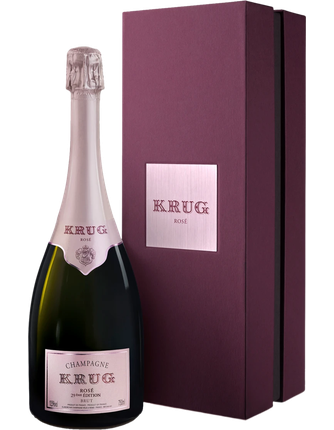
Krug Rosé 29th Edition Gift Boxed Champagne | 98 Points
Krug Rosé 29th Edition Gift Boxed Champagne | 98 Points
Couldn't load pickup availability
98 POINTS JAMESSUCKLING.COM! 96 POINTS JEB DUNNUCK! 96 POINTS WINE ENTHUSIAST! 95 POINTS WINE SPECTATOR! 29 INDIVIDUAL WINES FROM FIVE DIFFERENT VINTAGES! 33% RESERVE WINES DATING BACK TO 2010! 53% PINOT NOIR! 28% CHARDONNAY! 19% MEUNIER! STILL RED PINOT NOIR FROM TWO EXCEPTIONAL VINEYARD PARCELS! SEVEN YEARS OF CELLAR MATURATION! CELLARING POTENTIAL THROUGH TO 2050! THE MAGNIFICENT KRUG ROSÉ 29TH EDITION – BEAUTIFULLY GIFT BOXED – RRP $960!
98 Points – JamesSuckling.com | 96 Points – Audrey Frick, JebDunnuck.com | 96 Points – Wine Enthusiast & Cellar Selection | 95 Points – Wine Spectator | 94 Points – Antonio Galloni, Vinous | 94 Points – Tom Hewson, Decanter
Krug Rosé 29th Edition Gift Boxed – Champagne, France
RRP $960 per bottle
NOW HERE IS ONE OF THE MOST EXTRAORDINARY ROSÉ CHAMPAGNES ON THE PLANET!
There are magnificent Rosé Champagnes.
There are extraordinary prestige Rosé cuvées.
There are beautifully complex Champagnes that spend years developing in the cellars before release.
And then there is…
KRUG ROSÉ!
A Champagne that completely challenges the conventional perception of Rosé Champagne.
A Champagne that brings together the extraordinary complexity of multi-vintage blending, traditional small oak barrel fermentation, mature reserve wines and exceptional still red Pinot Noir.
A Champagne that possesses the structural sophistication to accompany dishes normally reserved for some of the world's greatest red wines.
And a Champagne that JamesSuckling.com has awarded an extraordinary 98 POINTS!
For anyone fascinated by the extraordinary possibilities of winemaking, the 29th Edition of Krug Rosé is a particularly compelling Champagne.
Just look at the magnificent pedigree behind this wine.
MAISON KRUG – ESTABLISHED IN 1843!
KRUG ROSÉ HERITAGE DATING BACK TO 1976!
29 INDIVIDUAL WINES!
FIVE DIFFERENT VINTAGES!
2017 BASE VINTAGE!
33% RESERVE WINES!
THE OLDEST RESERVE WINE DATES BACK TO 2010!
53% PINOT NOIR!
28% CHARDONNAY!
19% MEUNIER!
11% TRADITIONALLY MACERATED STILL RED PINOT NOIR!
LES CRAYONS – MUTIGNY PREMIER CRU – 2017!
CÔTE VALNON – AŸ GRAND CRU – 2016!
TRADITIONAL SMALL OAK BARREL FERMENTATION!
APPROXIMATELY SEVEN YEARS OF CELLAR MATURATION!
98 POINTS JAMESSUCKLING.COM!
96 POINTS JEB DUNNUCK!
96 POINTS WINE ENTHUSIAST!
95 POINTS WINE SPECTATOR!
CELLARING POTENTIAL THROUGH TO 2050 ACCORDING TO AUDREY FRICK!
BEAUTIFULLY PRESENTED IN THE ORIGINAL KRUG GIFT BOX!
Think wild strawberries.
Fresh raspberries.
Red cherries.
Cranberries.
White peach.
Nectarine.
Blood orange.
Pink grapefruit.
Dried plums.
Lavender.
Rose petals.
Cardamom.
Saffron.
Toasted brioche.
Roasted hazelnuts.
White chocolate.
Crushed chalk.
And a wonderfully persistent saline finish.
The palate is magnificent.
Silky.
Concentrated.
Layered.
Beautifully textured.
Wonderfully vinous.
Generous yet precise.
With extraordinarily fine bubbles and a subtle framework of Pinot Noir tannins.
THIS IS FAR MORE THAN SIMPLY A MAGNIFICENT ROSÉ CHAMPAGNE. THIS IS ONE OF THE WORLD'S GREAT GASTRONOMIC FINE WINES!
Maison Krug – One of the World's Greatest Champagne Houses
Now here's where the story becomes particularly fascinating.
1843!
It was in this year that Joseph Krug established Maison Krug in Reims with a vision that would fundamentally distinguish his Champagne house from many of its contemporaries.
Born in Mainz, in what is now Germany, Joseph Krug previously worked for Champagne Jacquesson before establishing his own house.
His philosophy was remarkably ambitious.
Rather than allowing the quality of his finest Champagne to be dictated by the conditions of an individual growing season, Joseph Krug believed it should be possible to create exceptional Champagne every year.
The solution was to preserve the individuality of wines from different vineyard parcels and maintain an extensive collection of reserve wines from previous harvests.
This would provide the blending team with an extraordinary range of possibilities.
Different varieties.
Different vineyards.
Different growing seasons.
Different stages of maturity.
Different expressions of texture, acidity, concentration and aromatic complexity.
The winemaker could then bring together these complementary characteristics to create a Champagne that transcended the possibilities of any individual component.
In 1848, Joseph Krug documented his winemaking philosophy in his now-famous notebook.
Nearly two centuries later, his principles remain central to the identity of Maison Krug.
ONE MAN'S EXTRAORDINARY VISION IN 1843 WOULD HELP CREATE ONE OF THE WORLD'S MOST PRESTIGIOUS CHAMPAGNE HOUSES!
1976 – The Extraordinary Birth of Krug Rosé
Now here's something particularly fascinating about the history of Krug Rosé.
Although Maison Krug was established in 1843, the origins of its Rosé Champagne date back to 1976.
More than 130 years after the establishment of the house.
The fifth generation of the Krug family wanted to create a completely different interpretation of Rosé Champagne.
The objective was not simply to produce a pink version of Krug Grande Cuvée.
Nor was it to create a delicate Champagne designed primarily as an aperitif.
The ambition was to create a Champagne that combined the extraordinary sophistication of Krug's blending philosophy with the structure, spice and aromatic complexity of still red Pinot Noir.
The freshness and elegance of exceptional white base wines.
The additional depth provided by red wine.
The complexity of mature reserve wines.
The rich textures associated with traditional Krug winemaking.
All brought together into a particularly sophisticated Rosé Champagne.
The inaugural composition was developed in 1976 and commercially introduced during the 1980s.
The result was one of the most distinctive prestige Rosé Champagnes in the world.
KRUG ROSÉ WAS CREATED TO CHALLENGE CONVENTIONAL THINKING ABOUT WHAT ROSÉ CHAMPAGNE COULD BE!
Multi-Vintage Rosé – A Completely Different Philosophy
Now here's something that every serious Champagne enthusiast should understand.
Krug Rosé is fundamentally different from many of Champagne's other great prestige Rosé cuvées.
Consider some of the world's legendary Rosé Champagnes.
Dom Pérignon Rosé.
Louis Roederer Cristal Rosé.
Billecart-Salmon Cuvée Elisabeth Salmon.
Laurent-Perrier Alexandra Rosé.
These magnificent Champagnes explore the personality of an individual growing season.
Krug Rosé follows an entirely different philosophy.
Rather than being restricted to one vintage, Maison Krug can draw upon its extraordinary collection of reserve wines from previous harvests.
This allows the winemaking team to explore different expressions of Chardonnay, Pinot Noir and Meunier, together with still red wines from different growing seasons.
Additional freshness.
Additional fruit concentration.
Additional structure.
Additional complexity.
Additional maturity.
The result is a Champagne that does not simply express the characteristics of 2017.
It combines those characteristics with the complementary qualities of four previous harvests.
NOT SIMPLY A NON-VINTAGE ROSÉ. AN EXTRAORDINARILY SOPHISTICATED MULTI-VINTAGE PRESTIGE ROSÉ CHAMPAGNE!
29 Individual Wines from Five Different Vintages
Now let's look at the extraordinary composition of the 29th Edition.
29 INDIVIDUAL WINES!
FIVE DIFFERENT VINTAGES!
2010–2017!
The youngest wines come from the 2017 harvest.
The oldest wines date back to 2010.
Each individual component possesses its own characteristics.
Its own vineyard origin.
Its own growing conditions.
Its own variety.
Its own stage of maturity.
Its own aromatic personality.
Its own texture and structure.
The extraordinary challenge for the blending team is determining how these individual wines can work together to create a Champagne possessing greater complexity than any of its individual components.
This becomes particularly sophisticated when still red Pinot Noir enters the equation.
The contribution of the red wine must be carefully balanced against the freshness, acidity and texture of the white base wines.
Too much extraction could overwhelm the elegance of the Champagne.
Too little structure could diminish its distinctive personality.
The objective is harmony.
29 INDIVIDUAL WINES. FIVE DIFFERENT VINTAGES. TWO EXCEPTIONAL RED-WINE VINEYARD PARCELS. ONE MAGNIFICENT CHAMPAGNE!
2017 – A Challenging Vintage That Demonstrates the Brilliance of Krug
Now here's where the 29th Edition becomes particularly fascinating from a winemaking perspective.
2017!
This was a challenging growing season in Champagne.
Following an initially cold period, warmer conditions encouraged relatively early vine development.
Spring frosts subsequently caused significant vineyard damage.
Conditions improved during May and June, allowing flowering to proceed favourably.
However, summer rainfall increased disease pressure, particularly for some of the region's black grape varieties.
Careful vineyard management and meticulous fruit selection became extremely important.
Favourable weather towards harvest helped the remaining fruit achieve maturity.
For producers relying entirely on the wines of one harvest, these conditions presented considerable challenges.
But this is precisely where the extraordinary Krug philosophy becomes so valuable.
The ability to draw upon reserve wines from previous vintages provided the blending team with additional possibilities.
Rather than being restricted to the still red Pinot Noir produced in 2017, Maison Krug incorporated a red-wine component from the 2016 harvest.
The white base wines could also be supplemented with carefully selected reserve wines.
The result is a remarkably generous and expressive Champagne, despite the challenges of its youngest vintage.
THE 29TH EDITION IS A MAGNIFICENT DEMONSTRATION OF THE EXTRAORDINARY ADVANTAGES OF MULTI-VINTAGE BLENDING!
33% Reserve Wines – An Extraordinary Library Dating Back to 2010
Now here's another particularly important element of the 29th Edition.
33% RESERVE WINES!
THE OLDEST WINE DATES BACK TO 2010!
Approximately two-thirds of the final Champagne comes from the 2017 harvest.
The remaining third comes from four earlier harvests.
Consider what this means for the complexity of the Champagne.
Some of the individual wines had already been developing for several years before the youngest grapes were even harvested.
These mature components provide a different expression of fruit, texture and aromatic complexity.
They can introduce additional breadth.
Savoury depth.
Beautifully integrated acidity.
Mature orchard-fruit characteristics.
Nutty complexity.
And additional layers of flavour.
This is particularly important in Rosé Champagne because the reserve wines can introduce additional richness and complexity without requiring an excessive proportion of still red wine.
The result can possess extraordinary depth while maintaining freshness and elegance.
ONE-THIRD OF THE FINAL CHAMPAGNE COMES FROM KRUG'S EXTRAORDINARY RESERVE-WINE LIBRARY!
53% Pinot Noir, 28% Chardonnay and 19% Meunier
Now let's look at the fascinating balance of the three grape varieties.
53% PINOT NOIR!
28% CHARDONNAY!
19% MEUNIER!
The Pinot Noir component includes 11% of the entire blend in the form of traditionally macerated still red wine.
This means the composition can be expressed as:
42% WHITE-VINIFIED PINOT NOIR!
11% RED-VINIFIED PINOT NOIR!
28% CHARDONNAY!
19% MEUNIER!
Each component has an important role to play.
Pinot Noir – Structure, Power and Extraordinary Depth
Pinot Noir forms the foundation of the 29th Edition.
The white-vinified Pinot Noir contributes structural depth, concentration, texture and palate weight.
The red-vinified Pinot Noir introduces a further dimension.
Red berries.
Floral perfume.
Spice.
Fine tannins.
And extraordinary gastronomic versatility.
The combination creates a Champagne with a particularly vinous personality.
Chardonnay – Freshness, Elegance and Mineral Precision
Chardonnay provides an essential contrast to the richness of Pinot Noir.
It introduces citrus freshness, floral aromatics, fine acidity and additional definition.
Without the contrasting characteristics of Chardonnay, the generous texture and additional phenolic structure of the Pinot Noir could become overwhelming.
Chardonnay provides direction and freshness through the palate.
It is fundamental to the extraordinary length and balance of the Champagne.
Meunier – Fruit Generosity and Beautiful Texture
Now here's another particularly interesting aspect of Krug Rosé.
19% MEUNIER!
Many of Champagne's most prestigious Rosé cuvées rely exclusively on Chardonnay and Pinot Noir.
Krug recognises the extraordinary contribution Meunier can make.
Beautifully expressive orchard fruit.
Stone fruit.
Exotic aromatics.
Generous textures.
Delicate spice.
And wonderfully rounded palate characteristics.
The Meunier component provides another dimension to the composition, helping create a particularly harmonious transition between the freshness of Chardonnay and the structural depth of Pinot Noir.
THREE MAGNIFICENT GRAPE VARIETIES BROUGHT TOGETHER THROUGH ONE OF THE WORLD'S MOST SOPHISTICATED CHAMPAGNE BLENDING PHILOSOPHIES!
11% Traditionally Macerated Pinot Noir – The Extraordinary Secret Behind Krug Rosé
Now this is where Krug Rosé becomes particularly fascinating.
11% TRADITIONALLY MACERATED STILL RED PINOT NOIR!
The red-wine component is far more than simply a means of creating the beautiful salmon-pink colour of the Champagne.
It is fundamental to its personality.
The production of exceptional still red Pinot Noir in Champagne presents a particularly interesting challenge.
The region's relatively cool climate means that achieving sufficient phenolic maturity can be difficult in some growing seasons.
The grapes need to possess enough ripeness to deliver expressive red-fruit characteristics.
The skins must provide beautifully integrated colour and tannin.
The resulting wine must possess sufficient concentration and structure to influence the final Champagne.
Yet it must also retain the finesse necessary to integrate beautifully with the white base wines.
The still red wines are traditionally macerated on their skins before being incorporated into the final Champagne composition.
This introduces an additional dimension of complexity.
Red-fruit concentration.
Floral aromatics.
Delicate spice.
Fine phenolic grip.
Additional structural depth.
And a fascinating savoury personality.
THE RED-WINE COMPONENT IS NOT SIMPLY ABOUT COLOUR. IT IS ABOUT STRUCTURE, TEXTURE, COMPLEXITY AND THE EXTRAORDINARY GASTRONOMIC PERSONALITY OF KRUG ROSÉ!
Rosé d'Assemblage vs Rosé de Saignée
There are two principal approaches to producing Rosé Champagne.
ROSÉ D'ASSEMBLAGE!
ROSÉ DE SAIGNÉE!
Rosé d'assemblage involves combining white base wines with a proportion of still red wine before secondary fermentation in bottle.
Rosé de saignée obtains its colour and additional phenolic characteristics through contact between the juice and the skins of black grapes.
Both approaches can produce extraordinary Champagne.
Krug employs the assemblage approach for its Rosé.
However, the individuality of the traditionally macerated still red Pinot Noir is particularly important to the final composition.
The blending team can select both white and red wines according to their individual qualities, rather than being restricted to the characteristics of one individual maceration.
For the 29th Edition, this goes one step further.
The red wines come from two different vineyard parcels.
And two different vintages.
NOW THAT IS WHERE THE EXTRAORDINARY SOPHISTICATION OF KRUG ROSÉ REALLY BECOMES APPARENT!
Two Exceptional Pinot Noir Vineyard Parcels – Les Crayons and Côte Valnon
One of the most fascinating technical details behind Krug Rosé 29th Edition is that Maison Krug identifies the individual vineyard parcels used for its still red-wine component.
LES CRAYONS – MUTIGNY – 2017!
CÔTE VALNON – AŸ – 2016!
Two individual vineyard parcels.
Two different villages.
Two different harvests.
Two separate expressions of Pinot Noir.
Both brought together to provide the structural and aromatic foundation of the red-wine component.
For serious wine enthusiasts, this is particularly exciting.
It demonstrates that even within an extraordinarily complex multi-vintage Champagne, the individuality of specific vineyard parcels remains enormously important.
Les Crayons – Mutigny Premier Cru – 2017
Mutigny is a Premier Cru village situated in the hills above Aÿ, overlooking the Marne Valley.
The vineyards occupy an elevated position within one of Champagne's most historically significant Pinot Noir-growing areas.
The surrounding landscape possesses a fascinating combination of chalk-rich geology, varying vineyard exposures and individual microclimates.
The Les Crayons parcel provided traditionally macerated Pinot Noir from the 2017 harvest for the 29th Edition.
The contribution of this particular component connects the still red-wine character of Krug Rosé with the personality of its youngest vintage.
The beautifully expressive red fruit.
The delicate spice.
The additional phenolic dimension.
And the structural complexity associated with still red Pinot Noir.
The selection of individual parcels becomes particularly important in challenging growing seasons.
Rather than relying upon a broad regional expression, the Krug blending team can assess the suitability of an individual wine according to its own characteristics.
LES CRAYONS – AN INDIVIDUAL PREMIER CRU PINOT NOIR PARCEL CONTRIBUTING TO ONE OF THE WORLD'S MOST PRESTIGIOUS ROSÉ CHAMPAGNES!
Côte Valnon – Aÿ Grand Cru – 2016
Now here's another particularly exciting element of the 29th Edition.
AŸ GRAND CRU!
For anyone interested in the extraordinary Pinot Noir terroirs of Champagne, Aÿ is a village you absolutely need to know.
Its history is intertwined with some of the greatest names in Champagne.
The village is internationally celebrated for Pinot Noir possessing richness, concentration, structural depth and extraordinary ageing potential.
The favourable slopes and chalk-rich soils can provide excellent conditions for the development of beautifully ripe and expressive Pinot Noir.
For the 29th Edition, Maison Krug incorporated still red Pinot Noir from the Côte Valnon parcel, harvested in 2016.
The incorporation of this wine demonstrates one of the great advantages of the Krug philosophy.
When the conditions of 2017 presented challenges for red-wine production, the blending team was not restricted to that particular harvest.
It could incorporate an exceptional red-wine component from the previous year.
The result is a more sophisticated composition, bringing together the complementary personalities of two individual Pinot Noir parcels and two different growing seasons.
CÔTE VALNON – AŸ GRAND CRU – 2016!
LES CRAYONS – MUTIGNY PREMIER CRU – 2017!
TWO EXTRAORDINARY PINOT NOIR TERROIRS. TWO DIFFERENT VINTAGES. ONE MAGNIFICENT ROSÉ CHAMPAGNE!
The Extraordinary Role of Tannin in Krug Rosé
Now here's something that lovers of great red Burgundy will particularly appreciate.
TANNIN IN CHAMPAGNE!
Tannin is something that most wine enthusiasts associate with still red wines.
Magnificent Burgundy.
Barolo.
Barbaresco.
Northern Rhône Syrah.
Great Bordeaux.
However, the incorporation of traditionally macerated red Pinot Noir into Krug Rosé introduces an additional structural dimension.
Rather than relying solely upon acidity and carbonation for definition, the Champagne possesses a subtle phenolic framework.
The influence of these fine tannins becomes particularly interesting with food.
Duck.
Game birds.
Roast pork.
Premium beef.
Wild mushrooms.
Black truffle.
The additional structure allows the Champagne to accompany dishes that might overwhelm a more delicate Blanc de Blancs.
The extraordinary achievement of Krug is that this structural depth never overwhelms the elegance of the Champagne.
The tannins remain fine.
The texture remains beautifully harmonious.
The acidity provides freshness.
And the mousse introduces an additional dimension of refinement.
THE STRUCTURAL SOPHISTICATION OF GREAT PINOT NOIR COMBINED WITH THE EXTRAORDINARY ELEGANCE OF PRESTIGE CHAMPAGNE!
Individual Parcel Vinification – Understanding Every Vineyard
One of the defining elements of the Krug winemaking philosophy is the individual vinification of selected vineyard parcels.
Rather than immediately combining fruit from numerous vineyard sites, the house seeks to preserve the individuality of its different components.
For anyone who loves great Burgundy, this philosophy will sound particularly familiar.
The importance of vineyard individuality.
Differences in soil.
Differences in exposure.
Differences in microclimate.
Differences in ripening.
And differences in the final expression of the wine.
The Krug approach allows the blending team to assess individual wines before deciding how they may contribute to the finished Champagne.
Some may be selected for Grande Cuvée.
Others for Krug Rosé.
Others may be retained within the reserve-wine library for future editions.
The decision is based upon the character of the individual wine and the contribution it can make.
This provides the house with an extraordinary range of blending possibilities.
THE COMPLEXITY OF KRUG BEGINS WITH UNDERSTANDING THE INDIVIDUALITY OF EACH VINEYARD PARCEL!
Traditional Small Oak Barrel Fermentation – One of the Great Signatures of Krug
Now here's another fundamental element of the extraordinary Krug personality.
TRADITIONAL SMALL OAK BARREL FERMENTATION!
Maison Krug is renowned for fermenting its white base wines in traditional small oak barrels, typically holding approximately 205 litres.
These seasoned barrels are not intended to impart dominant new-oak flavours.
The objective is not to create Champagne that tastes of heavily toasted oak.
Rather, the small-format barrels provide a means of preserving individual vineyard expressions while allowing the wines to develop their own distinctive textures.
The interaction between the wine and the fermentation vessel differs from fermentation in stainless steel.
The gradual interaction with oxygen can influence aromatic development and texture.
The individual barrel format also provides considerable flexibility in preserving separate vineyard components.
For Krug Rosé, this traditional approach contributes to the extraordinarily vinous personality of the Champagne.
The complexity.
The beautiful texture.
The integrated spice.
The interaction between fruit, savoury characteristics and freshness.
Following fermentation, selected reserve wines are maintained separately within the house's extensive reserve-wine library.
TRADITIONAL CHAMPAGNE CRAFTSMANSHIP COMBINED WITH ONE OF THE WORLD'S MOST SOPHISTICATED BLENDING PHILOSOPHIES!
Malolactic Fermentation – Preserving the Individual Personality of the Wines
Another interesting element of Krug's winemaking philosophy is its approach to malolactic fermentation.
During malolactic fermentation, sharper malic acid is converted into softer lactic acid.
The process can significantly influence the texture and perceived freshness of Champagne.
Krug does not systematically impose the same malolactic regime upon every individual base wine.
Variations between wines create additional opportunities for the blending team.
Some components may possess more pronounced acidity.
Others may provide greater textural generosity.
The objective is to achieve balance through the complementary personalities of the individual wines.
In Krug Rosé, this balance becomes particularly important because of the additional influence of the traditionally macerated red Pinot Noir.
The freshness must support the structure.
The texture must complement the tannins.
And the fruit must remain beautifully expressive.
Éric Lebel and Julie Cavil – Two Generations of Extraordinary Winemaking Expertise
Now let's talk about two of the most influential figures behind the modern identity of Maison Krug.
ÉRIC LEBEL!
JULIE CAVIL!
Éric Lebel served as Cellar Master of Maison Krug for more than two decades.
During this period, he helped preserve and develop the house's extraordinary reserve-wine library and individual parcel vinification philosophy.
Julie Cavil joined Maison Krug in 2006.
She spent more than a decade working alongside Lebel, developing an extraordinary understanding of the individual wines and vineyard parcels available to the blending team.
In 2020, she succeeded him as Cellar Master.
The 29th Edition provides a particularly fascinating connection between their respective contributions.
The youngest wines were harvested in 2017 during Lebel's tenure.
The Champagne developed through years of bottle maturation before reaching commercial release under Cavil's leadership.
For a Champagne such as Krug Rosé, the extraordinary skill of the Cellar Master extends considerably beyond assessing the quality of individual wines.
The winemaking team needs to anticipate how the white base wines, reserve wines and traditionally macerated red Pinot Noir will integrate over years of development.
The texture.
The acidity.
The tannins.
The fruit.
The spice.
The mousse.
And the evolving aromatic complexity.
Everything must eventually work together.
TWO GENERATIONS OF EXTRAORDINARY CELLAR MASTER EXPERTISE BROUGHT TOGETHER IN ONE MAGNIFICENT ROSÉ CHAMPAGNE!
Seven Years of Cellar Maturation
Now here's another particularly important element of Krug Rosé 29th Edition.
APPROXIMATELY SEVEN YEARS IN THE KRUG CELLARS!
Following the creation of the composition and secondary fermentation in bottle, the Champagne develops gradually in contact with its yeast lees.
During this process, autolysis contributes additional aromatic and textural complexity.
Think toasted brioche.
Fine pastry.
Roasted almonds.
Hazelnuts.
Biscuit.
Delicate savoury characteristics.
In a Champagne such as Krug Rosé, these characteristics interact beautifully with the primary fruit and floral aromatics derived from the Pinot Noir.
Wild strawberries.
Raspberries.
Cherries.
Rose petals.
Blood orange.
Spice.
And delicate phenolic structure.
The additional years of maturation provide an opportunity for these different components to develop into a more harmonious Champagne.
The result is a beautifully integrated combination of expressive fruit, savoury complexity and refined mousse.
SEVEN YEARS OF CELLAR MATURATION – ALLOWING THE EXTRAORDINARY COMPLEXITY OF KRUG ROSÉ TO DEVELOP!
More Than a Decade of Craftsmanship
Consider the extraordinary timeline behind this Champagne.
2010 – THE OLDEST RESERVE WINE IS HARVESTED!
2016 – PINOT NOIR FROM CÔTE VALNON IN AŸ IS HARVESTED!
2017 – PINOT NOIR FROM LES CRAYONS IN MUTIGNY AND THE YOUNGEST BASE WINES ARE HARVESTED!
2018 – THE COMPOSITION IS ASSEMBLED FOLLOWING THE YOUNGEST HARVEST!
WINTER 2023–2024 – DOCUMENTED BOTTLINGS RECEIVE THEIR FINAL CORK!
2025 – THE 29TH EDITION REACHES COMMERCIAL RELEASE!
Approximately 15 years separate the harvest of the oldest wine from the commercial release of the finished Champagne.
Think about the extraordinary patience involved.
The preservation of individual vineyard expressions.
The production of exceptional still red Pinot Noir.
The long-term maintenance of reserve wines.
The blending decisions.
The secondary fermentation.
The years of maturation.
And the careful assessment of the Champagne as it develops.
THIS IS A CHAMPAGNE WHOSE EXTRAORDINARY PERSONALITY DEPENDS UPON DECISIONS MADE LONG BEFORE THE FINISHED BOTTLE REACHES THE CUSTOMER!
Approximately 4.5 Grams Per Litre Dosage – Beautifully Dry and Sophisticated
Now here's another particularly interesting technical detail.
APPROXIMATELY 4.5 G/L DOSAGE!
The remarkably generous texture of Krug Rosé is not primarily the result of sweetness.
It comes from the extraordinary combination of Pinot Noir concentration, reserve-wine complexity, traditional winemaking, red-wine structure and extended bottle maturation.
The relatively restrained dosage allows the individual characteristics of the Champagne to remain beautifully expressive.
The ripe berries.
The floral perfume.
The fine spice.
The citrus freshness.
The savoury development.
And the mineral finish.
Although the reported dosage falls within the permitted range for Extra Brut, the Champagne is marketed as Brut.
BEAUTIFUL FRUIT GENEROSITY WITHOUT EXCESSIVE SWEETNESS. EXTRAORDINARY TEXTURE WITHOUT HEAVINESS. MAGNIFICENT STRUCTURE WITHOUT LOSING ELEGANCE!
Extraordinary International Critical Recognition
Krug Rosé 29th Edition has received magnificent recognition from some of the world's most respected wine critics.
98 POINTS – JAMESSUCKLING.COM
An extraordinary score recognising the beautifully refined texture, floral elegance, precision and exceptional length of the Champagne.
96 POINTS – AUDREY FRICK, JEBDUNNUCK.COM
96 POINTS – WINE ENTHUSIAST – CELLAR SELECTION
Outstanding recognition for the Champagne's layered richness, floral complexity, refreshing blood-orange characteristics and persistent savoury finish.
95 POINTS – WINE SPECTATOR
94 POINTS – ANTONIO GALLONI, VINOUS
94 POINTS – TOM HEWSON, DECANTER
98 POINTS JAMESSUCKLING.COM! 96 POINTS JEB DUNNUCK! 96 POINTS WINE ENTHUSIAST! 95 POINTS WINE SPECTATOR!
EXTRAORDINARY INTERNATIONAL CRITICAL RECOGNITION FOR ONE OF THE WORLD'S MOST PRESTIGIOUS ROSÉ CHAMPAGNES!
Wild Strawberry, Raspberry, Blood Orange, Lavender, Cardamom, Brioche and Crushed Chalk
Now this is where Krug Rosé 29th Edition becomes particularly extraordinary.
In the glass, the Champagne displays a beautiful salmon-pink colour with delicate copper reflections.
A magnificent stream of fine bubbles rises through the glass.
The aromatics are wonderfully layered.
Initially, there is a beautifully fragrant floral dimension.
Lavender.
Rose petals.
Heather.
Delicate peony.
Then comes the expressive fruit.
Wild strawberries.
Fresh raspberries.
Red cherries.
Cranberries.
White peach.
Nectarine.
Ripe pear.
And delicately preserved plums.
As the Champagne opens, the wonderfully refreshing citrus characteristics become increasingly apparent.
Blood orange.
Pink grapefruit.
Tangerine peel.
Followed by an intriguing array of spice.
Cardamom.
Saffron.
White pepper.
And delicate herbal notes.
The influence of the mature reserve wines and prolonged cellar maturation introduces another dimension.
Toasted brioche.
Fine pastry.
Roasted hazelnuts.
White chocolate.
Delicate almond.
And subtle savoury characteristics.
The palate is magnificent.
Beautifully rounded on entry.
The fruit expands across the middle palate, introducing expressive red berries, stone fruit and citrus.
The mousse is extraordinarily fine.
The Pinot Noir provides structural depth.
The red-wine component introduces beautifully integrated phenolic grip.
The Chardonnay provides freshness and precision.
The Meunier contributes another dimension of fruit generosity and texture.
Then comes the finish.
Blood orange.
Crushed chalk.
Delicate pepper.
Subtle herbal freshness.
Fine tannin.
And persistent saline complexity.
There is extraordinary concentration.
But not heaviness.
There is beautiful richness.
But not excessive sweetness.
There is magnificent structure.
But not aggression.
There is extraordinary complexity.
But never at the expense of elegance.
WILD STRAWBERRY. RASPBERRY. RED CHERRY. CRANBERRY. WHITE PEACH. BLOOD ORANGE. LAVENDER. CARDAMOM. SAFFRON. TOASTED BRIOCHE. WHITE CHOCOLATE. CRUSHED CHALK!
THIS IS AN EXTRAORDINARILY SOPHISTICATED EXPRESSION OF THE DEPTH, TEXTURE AND COMPLEXITY POSSIBLE IN GREAT ROSÉ CHAMPAGNE!
Krug Rosé 29th Edition vs Krug Grande Cuvée 173rd Edition
Now here's a particularly fascinating comparison for serious Champagne enthusiasts.
Two magnificent prestige Champagnes.
Both constructed around the 2017 harvest.
Both created through the extraordinary multi-vintage blending philosophy of Maison Krug.
Yet two very different expressions of Champagne.
Krug Grande Cuvée 173rd Edition – RRP $560
-
150 individual wines.
-
13 different vintages.
-
Oldest reserve wine from 2001.
-
31% reserve wines.
-
44% Pinot Noir.
-
34% Chardonnay.
-
22% Meunier.
-
Approximately seven years of cellar maturation.
-
97 Points JamesSuckling.com.
Grande Cuvée explores the extraordinary breadth and complexity that can be achieved through blending numerous vineyard origins and harvests.
The emphasis is on golden orchard fruit, roasted nuts, brioche, preserved citrus and extraordinary textural generosity.
Krug Rosé 29th Edition – RRP $960
-
29 individual wines.
-
Five different vintages.
-
Oldest reserve wine from 2010.
-
33% reserve wines.
-
53% Pinot Noir.
-
28% Chardonnay.
-
19% Meunier.
-
11% traditionally macerated still red Pinot Noir.
-
Two individually identified red-wine vineyard parcels.
-
Approximately seven years of cellar maturation.
-
98 Points JamesSuckling.com.
Krug Rosé explores a different dimension of the house philosophy.
The emphasis shifts towards red berries, floral perfume, exotic spice, fine tannin and vinous structure.
The additional red-wine component expands the gastronomic possibilities of the Champagne considerably.
GRANDE CUVÉE FOR EXTRAORDINARY BREADTH, ORCHARD FRUIT AND RESERVE-WINE COMPLEXITY. KRUG ROSÉ FOR RED-FRUIT PERFUME, PINOT NOIR STRUCTURE AND GASTRONOMIC SOPHISTICATION!
Krug Rosé 29th Edition vs 2009 Dom Pérignon Rosé
Now here's another particularly fascinating comparison.
Two of the world's great prestige Rosé Champagnes.
Two completely different philosophies.
2009 Dom Pérignon Rosé – RRP $900
-
One individual vintage.
-
56% Pinot Noir.
-
44% Chardonnay.
-
No Meunier.
-
Approximately 13–15% still red Pinot Noir.
-
More than 12 years of lees maturation.
-
98 Points Antonio Galloni, Vinous.
-
97 Points JamesSuckling.com.
The 2009 Dom Pérignon Rosé explores the extraordinary generosity of a beautifully ripe growing season.
The emphasis is on concentrated Pinot Noir fruit, silky texture, structural depth and the relationship between long maturation and vintage individuality.
Krug Rosé 29th Edition – RRP $960
-
Five different vintages.
-
53% Pinot Noir.
-
28% Chardonnay.
-
19% Meunier.
-
33% reserve wines.
-
11% traditionally macerated still red Pinot Noir.
-
Two red-wine vineyard parcels from two different harvests.
-
Approximately seven years of cellar maturation.
-
98 Points JamesSuckling.com.
The Krug explores the extraordinary possibilities of combining numerous harvests, individual vineyard expressions and three different grape varieties.
The influence of traditional small oak barrel fermentation adds another distinctive element to the house style.
For collectors, the opportunity to taste these two Champagnes alongside one another would be particularly rewarding.
Dom Pérignon explores the extraordinary personality of a single vintage.
Krug explores the extraordinary possibilities of combining numerous vintages.
TWO OF THE WORLD'S MOST PRESTIGIOUS ROSÉ CHAMPAGNES. TWO COMPLETELY DIFFERENT WINEMAKING PHILOSOPHIES. TWO MAGNIFICENT EXPRESSIONS OF PINOT NOIR!
Krug Rosé 29th Edition vs 28th Edition
The individual edition numbers provide Champagne enthusiasts with a fascinating opportunity to explore the evolution of Krug Rosé.
The 28th Edition was constructed around the 2016 harvest.
The 29th Edition is constructed around the 2017 harvest.
Each represents a new composition rather than an attempt to reproduce exactly the same Champagne.
The reserve wines change.
The balance of grape varieties changes.
The red-wine components change.
The personality of the youngest harvest changes.
The 29th Edition is particularly interesting for its relatively approachable, generous and expressive personality.
Some previous editions of Krug Rosé have displayed deeper colour and more overt red-wine structure.
The 29th Edition offers a return to a lighter salmon-coloured expression, while retaining the beautifully vinous character associated with the cuvée.
The result is a Champagne that is already remarkably expressive while possessing the structural foundation for further development.
EVERY EDITION TELLS A DIFFERENT STORY. EVERY EDITION PROVIDES ANOTHER OPPORTUNITY TO EXPLORE THE EXTRAORDINARY WORLD OF KRUG ROSÉ!
An Extraordinary Champagne for Lovers of Great Red Burgundy
Now here's something that makes Krug Rosé particularly fascinating.
If you love great red Burgundy, this is a Champagne that absolutely deserves your attention.
Consider the characteristics that make exceptional Pinot Noir so compelling.
Expressive red berries.
Beautiful floral perfume.
Delicate spice.
Fine tannins.
Savoury complexity.
Beautifully integrated texture.
And extraordinary length.
Now consider those characteristics combined with the freshness, mature reserve-wine complexity and extraordinarily fine mousse of Krug Rosé.
The relationship between fruit and texture.
The subtle phenolic grip.
The influence of individual vineyard parcels.
The importance of beautiful Pinot Noir.
The extraordinary possibilities of prolonged maturation.
These are all characteristics that serious Burgundy enthusiasts can appreciate.
Krug Rosé is not attempting to replicate Burgundy.
However, it offers a particularly sophisticated exploration of the vinous characteristics of Pinot Noir within the distinctive terroirs and traditions of Champagne.
THIS IS A CHAMPAGNE FOR PEOPLE WHO APPRECIATE GREAT FINE WINE, NOT SIMPLY GREAT SPARKLING WINE!
One of the World's Great Gastronomic Champagnes
Now here's another reason Krug Rosé occupies such a special position within the world of Champagne.
ITS EXTRAORDINARY VERSATILITY WITH FOOD!
The structural depth provided by traditionally macerated Pinot Noir allows the Champagne to accompany dishes that might normally be paired with serious red wines.
The fruit.
The spice.
The fine tannins.
The acidity.
The reserve-wine complexity.
The beautifully integrated mousse.
All contribute to a magnificent range of gastronomic possibilities.
Roast Duck Breast with Morello Cherry Jus
One of the great potential pairings for Krug Rosé.
The expressive berry fruit, beautifully integrated Pinot Noir tannins and refreshing acidity provide a magnificent accompaniment to the richness of duck.
Wild Boar Tenderloin with Juniper and Blackberries
The Champagne's structural sophistication and savoury complexity provide an extraordinary accompaniment to the distinctive flavour of wild boar.
South Australian Southern Rock Lobster with Saffron Butter
The rich texture complements the natural generosity of lobster, while the Champagne's citrus freshness and delicate spice provide beautiful balance.
Roast Pigeon with Black Truffle
The beautifully vinous structure, mature reserve-wine complexity and earthy nuances make this a particularly sophisticated pairing.
Wagyu Beef Tataki with Ponzu
The fine phenolic framework provides sufficient structure to complement the richness of Wagyu, while the citrus freshness provides contrast.
Seared Bluefin Tuna with Sesame and Ginger
The texture of the tuna works beautifully with the Champagne's Pinot Noir structure and delicate spice.
Peking Duck
The expressive red fruit provides a magnificent contrast to the richness of crispy duck, while the refreshing acidity keeps the pairing beautifully balanced.
Spencer Gulf King Prawns with Blood Orange and Chilli
The sweetness of the prawns complements the fruit generosity of the Champagne, while blood orange and chilli highlight its citrus and spice characteristics.
Roast Quail with Pomegranate
The beautifully fragrant berry fruit and fine tannins provide an extraordinary accompaniment to quail.
Crispy Pork Belly with Chinese Five Spice
The acidity and fine bubbles provide a refreshing contrast to the richness of pork belly, while the Champagne's exotic spice complements the dish.
Wild Mushroom Risotto with Black Truffle
The beautifully developed reserve-wine complexity and savoury characteristics work magnificently with mushrooms and truffle.
Grilled Sardines with Lemon and Herbs
A considerably simpler pairing that highlights the Champagne's saline freshness and gastronomic versatility.
Charred Cauliflower with Romesco
The roasted flavours, subtle nuttiness and vibrant acidity provide an intriguing contrast to the generosity of the Champagne.
Premium Jabugo Ibérico Ham
The richness and saltiness of exceptional Ibérico ham provide a magnificent accompaniment to the fine structure and refreshing complexity of Krug Rosé.
36-Month Aged Comté
The mature nutty characteristics of the cheese beautifully complement the developed pastry and savoury nuances of the Champagne.
Krug Rosé is particularly well suited to savoury, richly flavoured dishes.
It is generally less suited to sweet desserts, which can diminish the perception of fruit and balance in a dry Champagne.
THIS IS A CHAMPAGNE THAT CAN ACCOMPANY AN ENTIRE MAGNIFICENT MEAL!
Serving Krug Rosé – Temperature, Glassware and Aromatic Development
Now here's something particularly important when serving a Champagne of this quality.
DO NOT SERVE KRUG ROSÉ TOO COLD!
Maison Krug recommends serving its Champagnes between 9°C and 12°C.
For the 29th Edition Rosé, serving towards the warmer end of that range can help reveal its extraordinary aromatic and textural complexity.
If served excessively cold, many of its most fascinating characteristics can become difficult to appreciate.
The floral perfume.
The red-fruit complexity.
The influence of the mature reserve wines.
The delicate spice.
The beautifully integrated Pinot Noir tannins.
The savoury finish.
Glassware is equally important.
Maison Krug developed the Joseph glass in collaboration with Riedel to showcase the extraordinary personality of its Champagnes.
A generously proportioned white wine glass or tulip-shaped prestige Champagne glass is also an excellent choice.
Allow the Champagne to develop gradually in the glass.
SERVE AT 10–12°C. USE A GENEROUSLY PROPORTIONED GLASS. ALLOW THE EXTRAORDINARY PERSONALITY OF THE CHAMPAGNE TO REVEAL ITSELF!
Cellaring – Extraordinary Development Potential Through to 2050
Now here's another particularly exciting aspect of Krug Rosé 29th Edition.
THIS IS A CHAMPAGNE WITH MAGNIFICENT LONG-TERM DEVELOPMENT POTENTIAL!
The relatively generous and expressive personality of the 29th Edition means it already offers considerable drinking appeal.
However, the extraordinary combination of Pinot Noir structure, Chardonnay acidity, mature reserve wines and extended cellar maturation provides a strong foundation for further development.
Over time, the youthful fruit characteristics may evolve towards increasingly complex savoury expressions.
Dried strawberries.
Preserved cherries.
Dried rose petals.
Blood-orange marmalade.
Dried plums.
Roasted hazelnuts.
Toasted almonds.
Gingerbread.
Exotic spice.
Black truffle.
And beautifully developed earthy characteristics.
The fine tannins may become increasingly integrated into the texture.
The interaction between the red-wine component and the mature reserve wines may reveal additional layers of complexity.
Audrey Frick of JebDunnuck.com recommends a drinking window extending from 2025 to 2050.
Wine Spectator recommends drinking through to 2035.
For customers who appreciate youthful fruit, floral perfume and beautifully refreshing acidity, the Champagne is already entering an extremely rewarding drinking period.
For serious collectors who appreciate the extraordinary complexity of mature prestige Champagne, carefully cellared bottles provide the opportunity to explore its evolution over the coming decades.
SUGGESTED CELLARING: NOW–2050, DEPENDING UPON STORAGE CONDITIONS AND PERSONAL PREFERENCE!
Krug iD – Discover the Individual Story Behind Your Bottle
Now here's another particularly fascinating aspect of Maison Krug.
KRUG iD!
An individual six-digit identification code appears on bottles of Krug Champagne.
The code allows enthusiasts to explore additional information about their particular bottling through the Krug website.
The composition.
The youngest harvest.
The oldest reserve wine.
The grape varieties.
The cellar maturation.
The period in which the Champagne received its final cork.
For example, Krug iD 124021 identifies a documented bottling of Krug Rosé 29th Edition that received its cork during the winter of 2023–2024.
For serious Champagne collectors, this is particularly valuable.
Two bottles belonging to the same edition may have different disgorgement histories and therefore slightly different development characteristics.
The Krug iD provides an extraordinary level of transparency.
EVERY EDITION HAS ITS OWN PERSONALITY. EVERY BOTTLE HAS ITS OWN STORY!
Beautifully Gift Boxed – One of the World's Most Prestigious Wine Gifts
Now here's another reason this particular release is so appealing.
THE ORIGINAL KRUG ROSÉ PRESENTATION BOX!
98 POINTS JAMESSUCKLING.COM!
29 INDIVIDUAL WINES!
FIVE DIFFERENT VINTAGES!
TWO EXCEPTIONAL PINOT NOIR VINEYARD PARCELS!
CELLARING POTENTIAL THROUGH TO 2050!
Few wines combine extraordinary international prestige, sophisticated winemaking, exceptional critical recognition and magnificent presentation quite like Krug Rosé.
Whether you are looking for an extraordinary Christmas gift, a significant anniversary present, a wedding gift, a milestone birthday present or a premium corporate gift, this is a particularly sophisticated choice.
For serious wine enthusiasts, there is the extraordinary winemaking philosophy.
For Champagne collectors, there is the individuality of the edition and magnificent development potential.
For anyone who appreciates the world's great luxury wines, there is the extraordinary heritage of Maison Krug.
ONE OF THE WORLD'S MOST PRESTIGIOUS ROSÉ CHAMPAGNES, BEAUTIFULLY PRESENTED IN ITS ORIGINAL KRUG GIFT BOX!
Why We Love This Champagne at Liquid Vibe
At Liquid Vibe, we love wines that possess far more than simply an internationally recognisable label.
We love extraordinary vineyards.
Individual winemaking philosophies.
The complexity of different growing seasons.
The importance of time.
The influence of exceptional winemakers.
And wines that challenge our understanding of what is possible in the world of fine wine.
Krug Rosé 29th Edition represents all of these characteristics.
First, there is the extraordinary history.
MAISON KRUG – ESTABLISHED IN 1843!
THE EXTRAORDINARY VISION OF JOSEPH KRUG!
KRUG ROSÉ HERITAGE DATING BACK TO 1976!
Then there is the extraordinary composition.
29 INDIVIDUAL WINES!
FIVE DIFFERENT VINTAGES!
2017 BASE VINTAGE!
33% RESERVE WINES!
THE OLDEST RESERVE WINE DATES BACK TO 2010!
Then there is the balance of grape varieties.
53% PINOT NOIR!
28% CHARDONNAY!
19% MEUNIER!
Then there is the extraordinary red-wine component.
11% TRADITIONALLY MACERATED STILL RED PINOT NOIR!
LES CRAYONS – MUTIGNY PREMIER CRU – 2017!
CÔTE VALNON – AŸ GRAND CRU – 2016!
Then there is the winemaking philosophy.
INDIVIDUAL PARCEL VINIFICATION!
TRADITIONAL SMALL OAK BARREL FERMENTATION!
AN EXTRAORDINARY RESERVE-WINE LIBRARY!
THE BLENDING EXPERTISE OF ÉRIC LEBEL AND JULIE CAVIL!
Then there is the maturation.
APPROXIMATELY SEVEN YEARS IN THE KRUG CELLARS!
Then come the extraordinary scores.
98 POINTS – JAMESSUCKLING.COM!
96 POINTS – JEB DUNNUCK!
96 POINTS – WINE ENTHUSIAST!
95 POINTS – WINE SPECTATOR!
94 POINTS – VINOUS!
94 POINTS – DECANTER!
Then there is the extraordinary cellaring potential.
THROUGH TO 2050 ACCORDING TO AUDREY FRICK!
Then there is the magnificent presentation.
THE ORIGINAL KRUG ROSÉ GIFT BOX!
And finally, there is the Champagne itself.
Magnificently fragrant.
Extraordinarily complex.
Silky.
Concentrated.
Beautifully textured.
Wonderfully vinous.
Finely structured.
Extraordinarily persistent.
And magnificently sophisticated.
For anyone who loves great Pinot Noir.
For anyone who appreciates the complexity of magnificent red Burgundy.
For anyone who collects the world's greatest Champagnes.
For anyone fascinated by the extraordinary art of multi-vintage blending.
Or anyone who simply wants to experience one of the world's most prestigious Rosé Champagnes.
KRUG ROSÉ 29TH EDITION ABSOLUTELY DESERVES YOUR ATTENTION!
98 POINTS JAMESSUCKLING.COM. 29 INDIVIDUAL WINES. FIVE DIFFERENT VINTAGES. 33% RESERVE WINES. 11% TRADITIONALLY MACERATED RED PINOT NOIR. TWO EXCEPTIONAL VINEYARD PARCELS. SEVEN YEARS OF CELLAR MATURATION. CELLARING POTENTIAL THROUGH TO 2050!
KRUG ROSÉ 29TH EDITION – ONE OF THE WORLD'S GREATEST ROSÉ CHAMPAGNES AND AN EXTRAORDINARY CELEBRATION OF THE POWER, PERFUME, STRUCTURE AND SOPHISTICATION OF PINOT NOIR!
Wine Details
-
Producer: Maison Krug
-
Established: 1843
-
Founder: Joseph Krug
-
Location: Reims, Champagne
-
Wine: Krug Rosé 29th Edition
-
French Designation: Krug Rosé 29ème Édition
-
Krug Rosé Origins: 1976
-
Classification: Multi-Vintage Prestige Rosé Cuvée
-
Vintage Classification: Non-Vintage (NV)
-
Base Vintage: 2017
-
Youngest Wine: 2017
-
Oldest Reserve Wine: 2010
-
Number of Individual Wines: 29
-
Number of Different Vintages: Five
-
Base Vintage Component: 67%
-
Reserve Wine Component: 33%
-
Region: Champagne
-
Appellation: Champagne AOC
-
Country: France
-
Parent Company: LVMH
-
Pinot Noir: 53%
-
Chardonnay: 28%
-
Meunier: 19%
-
White-Vinified Pinot Noir: 42% of the final blend
-
Red-Vinified Pinot Noir: 11% of the final blend
-
Red-Wine Production: Traditional skin maceration
-
Red-Wine Vineyard Parcel One: Les Crayons
-
Village: Mutigny Premier Cru
-
Les Crayons Vintage: 2017
-
Red-Wine Vineyard Parcel Two: Côte Valnon
-
Village: Aÿ Grand Cru
-
Côte Valnon Vintage: 2016
-
Rosé Production Method: Rosé d'assemblage
-
Harvest Method: Hand-picked
-
Vinification: Individual vineyard parcel vinification
-
White Base-Wine Fermentation: Traditional small seasoned oak barrels
-
Traditional Barrel Capacity: Approximately 205 litres
-
Reserve-Wine Storage: Individually maintained in stainless steel
-
Malolactic Fermentation: Variable according to individual wines
-
Winemaking Heritage: Éric Lebel and Julie Cavil
-
Cellar Master: Julie Cavil
-
Production Method: Traditional Champagne bottle fermentation
-
Cellar Maturation: Approximately seven years
-
Disgorgement: Winter 2023–2024 for documented Krug iD 124021
-
Commercial Release: 2025
-
Reported Dosage: Approximately 4.5 g/L
-
Sweetness Classification: Brut
-
Alcohol: 12.5%
-
Closure: Traditional Champagne cork
-
Bottle Size: 750ml
-
Packaging: Original luxury Krug Rosé presentation gift box
-
Bottle Identification: Individual six-digit Krug iD
-
Colour: Salmon pink with copper reflections
-
Style: Rich, fragrant, complex, beautifully textured, vinous and finely structured prestige Rosé Champagne
-
Aromas: Wild strawberry, raspberry, red cherry, cranberry, white peach, nectarine, blood orange, lavender, rose petals, cardamom, saffron, toasted brioche and roasted hazelnuts
-
Palate: Expressive red berries, silky texture, beautifully integrated Pinot Noir tannins, refined mousse, citrus freshness, delicate spice and a persistent saline mineral finish
-
JamesSuckling.com: 98 Points
-
Audrey Frick – JebDunnuck.com: 96 Points
-
Wine Enthusiast: 96 Points – Cellar Selection
-
Wine Spectator: 95 Points
-
Antonio Galloni – Vinous: 94 Points
-
Tom Hewson – Decanter: 94 Points
-
Gault & Millau: 93 Points
-
RRP: $960 per bottle
-
Recommended Serving Temperature: 10–12°C
-
Recommended Glassware: Krug Joseph glass, prestige Champagne glass or generously proportioned white wine glass
-
Food Pairing: Duck, wild boar, pigeon, lobster, Wagyu beef, bluefin tuna, pork belly, quail, black truffle, wild mushrooms, Ibérico ham and aged Comté
-
Recommended Cellaring: Now–2050 under appropriate storage conditions
Share