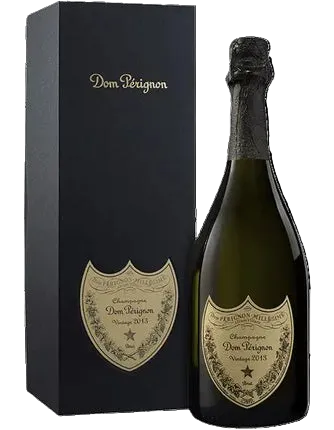
Dom Perignon
2013 Dom Pérignon Vintage Champagne | 98 Points
2013 Dom Pérignon Vintage Champagne | 98 Points
Couldn't load pickup availability
98 POINTS JAMESSUCKLING.COM! 98 POINTS JAMES HALLIDAY! TOP 100 WINES OF 2023! 96 POINTS DECANTER! 96 POINTS WINE SPECTATOR! 95+ POINTS ROBERT PARKER'S WINE ADVOCATE! 51% PINOT NOIR! 49% CHARDONNAY! AN EXTRAORDINARY LATE-HARVEST VINTAGE! EIGHT YEARS ON LEES! CELLARING POTENTIAL THROUGH TO 2045! THE MAGNIFICENT 2013 DOM PÉRIGNON – RRP $540!
98 Points – JamesSuckling.com | 98 Points – James Halliday | 96 Points – Decanter | 96 Points – Wine Spectator | 96 Points – Jasper Morris MW | 95+ Points – Robert Parker's Wine Advocate | 18.5/20 Points – Jancis Robinson MW
James Halliday's Top 100 Wines of 2023
2013 Dom Pérignon Vintage Brut – Champagne, France
RRP $540 per bottle
NOW HERE IS ONE OF THE MOST ICONIC WINES IN THE WORLD FROM A VINTAGE THAT SERIOUS CHAMPAGNE COLLECTORS SHOULD BE PAYING PARTICULAR ATTENTION TO!
There are great Champagnes.
There are extraordinary prestige cuvées.
There are wines that transcend their region and become internationally recognised symbols of winemaking excellence.
And then there is…
DOM PÉRIGNON!
One of the most recognisable fine wines on the planet.
A Champagne produced exclusively from individual vintages.
A Champagne that represents an extraordinary marriage between Chardonnay and Pinot Noir.
A Champagne that spends approximately eight years or longer developing in the cellars before its initial release.
And in 2013, a Champagne that takes us back to the classical, late-harvest vintages that helped establish the extraordinary reputation of this legendary producer.
THIS IS A DOM PÉRIGNON FOR SERIOUS CHAMPAGNE ENTHUSIASTS AND COLLECTORS!
Just look at the extraordinary pedigree behind this wine.
98 POINTS – JAMESSUCKLING.COM!
98 POINTS – JAMES HALLIDAY!
JAMES HALLIDAY'S TOP 100 WINES OF 2023!
96 POINTS – DECANTER!
96 POINTS – WINE SPECTATOR!
96 POINTS – JASPER MORRIS MW!
95+ POINTS – ROBERT PARKER'S WINE ADVOCATE!
18.5/20 POINTS – JANCIS ROBINSON MW!
51% PINOT NOIR!
49% CHARDONNAY!
AN EXTRAORDINARY LATE-HARVEST VINTAGE!
HARVEST EXTENDING INTO MID-OCTOBER!
VINCENT CHAPERON AND RICHARD GEOFFROY'S EXTRAORDINARY WINEMAKING LEGACY!
APPROXIMATELY EIGHT YEARS ON LEES BEFORE INITIAL RELEASE!
5 GRAMS PER LITRE DOSAGE!
CELLARING POTENTIAL THROUGH TO 2045!
Think lemon oil.
White peach.
Apricot.
Mandarin.
Orange blossom.
Jasmine.
Toasted almonds.
Freshly baked brioche.
Ginger.
Cardamom.
Subtle smoke.
Crushed chalk.
And an extraordinary saline, mineral finish.
The palate is beautifully sculpted.
Silky.
Layered.
Precise.
Restrained in its power.
Wonderfully textural.
And possessing the freshness and structure to develop magnificently over the coming decades.
THIS IS CLASSICAL DOM PÉRIGNON – ELEGANCE, MINERALITY, COMPLEXITY AND EXTRAORDINARY LONGEVITY!
Dom Pérignon – One of the World's Greatest Prestige Cuvées
There are very few wines in the world with the international recognition of Dom Pérignon.
The distinctive shield-shaped label.
The iconic bottle.
The extraordinary history.
The association with some of the greatest vintages in Champagne.
Yet behind all the recognition and prestige lies a particularly fascinating winemaking philosophy.
DOM PÉRIGNON IS ALWAYS A VINTAGE CHAMPAGNE!
There is no non-vintage Dom Pérignon.
Every vintage represents the characteristics of one individual growing season, interpreted through the distinctive philosophy of the producer.
Unlike conventional non-vintage Champagne, where reserve wines from earlier harvests can be incorporated to maintain consistency, Dom Pérignon must create its identity entirely from the wines of a single year.
This makes vintage selection particularly important.
If the quality or character of the harvest does not meet the expectations of the winemaking team, a vintage may not be declared.
The objective is not simply to produce a luxurious Champagne.
It is to achieve harmony between the character of the vintage, the individuality of Champagne's vineyards and the complementary personalities of Chardonnay and Pinot Noir.
ONE HARVEST. ONE VINTAGE. ONE EXTRAORDINARY EXPRESSION OF CHAMPAGNE!
Dom Pierre Pérignon – The Benedictine Monk Behind the Legend
The history behind Dom Pérignon takes us back to the seventeenth century.
1668!
It was in this year that Benedictine monk Dom Pierre Pérignon became responsible for the cellars and administration of the Abbey of Hautvillers.
Situated above the Marne Valley, the abbey occupies a particularly significant place in Champagne's winemaking history.
For approximately 47 years, Dom Pierre Pérignon dedicated himself to improving the quality of the wines produced at Hautvillers.
His work contributed to the development of more sophisticated approaches to grape selection, pressing and blending.
One of the most important aspects of his legacy was recognising that wines from different vineyard origins could be combined to create something more complete than their individual components.
Contrary to popular mythology, Dom Pierre Pérignon did not invent sparkling Champagne.
His contribution to the advancement of winemaking in Champagne, however, remains historically significant.
The modern prestige cuvée bearing his name continues that pursuit of quality and harmony.
MORE THAN 350 YEARS OF WINEMAKING HERITAGE INSPIRED BY THE ABBEY OF HAUTVILLERS!
The Legendary 1921 Vintage – The Beginning of Modern Dom Pérignon
The first commercial vintage of Dom Pérignon was the legendary 1921.
Introduced commercially during the 1930s, it helped establish the modern concept of prestige Champagne.
Rather than simply producing a more expensive version of an existing Champagne, Dom Pérignon developed its own distinctive identity.
A wine made from carefully selected vineyard origins.
Exclusively vintage Champagne.
A particular emphasis on the interaction between Chardonnay and Pinot Noir.
Extended maturation.
And an extraordinary commitment to the development of complexity over time.
Today, Dom Pérignon occupies a unique position within the prestigious LVMH Champagne portfolio.
Part of the Moët & Chandon heritage, yet possessing its own identity, philosophy and dedicated winemaking team.
ONE OF THE DEFINING WINES IN THE HISTORY OF PRESTIGE CHAMPAGNE!
2013 – The Return of Classical Late-Harvest Champagne
Now here's where this particular Dom Pérignon becomes extraordinarily interesting.
2013!
For anyone who appreciates Champagne with freshness, mineral precision, structural definition and exceptional cellaring potential, the characteristics of this vintage deserve particular attention.
The growing season began with a cold, wet winter.
Spring remained cool and unusually rainy.
Budburst occurred approximately two weeks later than the preceding decade's average.
That delay continued through much of the growing season.
Flowering conditions reduced fruit set in some vineyards, naturally limiting production.
Then came the summer.
Warm weather.
Dry conditions.
Exceptional sunshine.
The combination allowed the grapes to progress towards maturity while retaining important natural acidity.
Rain returned during the early part of September, creating concerns about the health of the grapes.
However, drying easterly winds subsequently helped maintain favourable conditions as the fruit approached maturity.
The result was an unusually late harvest by modern Champagne standards.
DOM PÉRIGNON BEGAN HARVESTING ON 28 SEPTEMBER AND CONTINUED UNTIL 15 OCTOBER!
The extended ripening period allowed the development of flavour and texture without sacrificing the freshness that makes this vintage so distinctive.
The result is a Champagne with an intriguing combination of generosity and restraint.
Ripe fruit.
Fine acidity.
A beautifully defined mineral framework.
A persistent finish.
And excellent potential for long-term development.
2013 – A MAGNIFICENT REMINDER OF THE CLASSICAL, LATE-RIPENING VINTAGES OF CHAMPAGNE!
Why a Late Harvest Can Be So Important in Champagne
For serious wine enthusiasts, the significance of the 2013 growing season is particularly fascinating.
The timing of harvest profoundly influences the character of a Champagne.
The winemaker is looking for more than sugar ripeness.
Aromatic development.
Acid balance.
Fruit concentration.
Phenolic maturity.
And the structural characteristics necessary for extended maturation.
An extended growing season can allow these different elements to develop gradually.
When conditions are favourable, the resulting wines can combine impressive flavour maturity with the freshness required for long-term ageing.
This is particularly important for a prestige cuvée such as Dom Pérignon.
The base wines must possess sufficient character and structure to evolve through many years of bottle maturation before release.
The 2013 vintage possesses the kind of underlying freshness that makes its development particularly exciting to follow.
NOT SIMPLY RIPENESS. NOT SIMPLY ACIDITY. BUT THE EXTRAORDINARY BALANCE BETWEEN THE TWO!
51% Pinot Noir and 49% Chardonnay – Two Magnificent Varieties in Harmony
Now let's look at the composition of the 2013 Dom Pérignon.
51% PINOT NOIR!
49% CHARDONNAY!
NO MEUNIER!
The almost equal proportions of Champagne's two most prestigious grape varieties make this vintage a particularly fascinating expression of the Dom Pérignon philosophy.
Neither variety is intended to dominate the other.
The objective is harmony.
51% Pinot Noir – Structure, Depth and Generosity
Pinot Noir contributes much of the underlying vinous character of the Champagne.
Palate weight.
Depth.
Fruit concentration.
Structural definition.
And a beautifully expansive middle palate.
In the 2013 vintage, the Pinot Noir provides generosity without overwhelming the precision of the wine.
Think subtle red fruits, ripe stone fruit and delicate spice.
There is an underlying richness that becomes increasingly apparent as the Champagne develops in the glass.
49% Chardonnay – Freshness, Precision and Mineral Finesse
The Chardonnay provides a contrasting dimension.
Citrus freshness.
White floral perfume.
Fine acidity.
Elegance.
And a beautifully defined mineral framework.
The Chardonnay is particularly important in maintaining the sense of energy and freshness that distinguishes the 2013 vintage.
Together, the varieties create a Champagne possessing both impressive breadth and beautiful linearity.
THE STRUCTURAL DEPTH OF PINOT NOIR COMBINED WITH THE EXTRAORDINARY PRECISION OF CHARDONNAY!
The Magnificent Terroirs Behind Dom Pérignon
Dom Pérignon's blending philosophy draws upon some of Champagne's most celebrated vineyard areas.
The Côte des Blancs.
The Montagne de Reims.
And the historic vineyards associated with Hautvillers.
The diversity of these terroirs provides the winemaking team with a fascinating range of blending possibilities.
Rather than expressing one individual vineyard, Dom Pérignon seeks to create a complete interpretation of the vintage from complementary origins.
Côte des Blancs – The Spiritual Home of Champagne Chardonnay
There are few regions in the world more exciting for lovers of Chardonnay-based sparkling wine.
The Côte des Blancs is home to legendary Grand Cru villages including:
Avize.
Cramant.
Le Mesnil-sur-Oger.
Oger.
Chouilly.
Oiry.
The extraordinary chalk-rich soils help regulate water availability while providing excellent drainage.
Combined with Champagne's relatively cool climate, these conditions can produce Chardonnay possessing remarkable freshness, aromatic precision and ageing potential.
The role of Chardonnay in Dom Pérignon is not merely to provide acidity.
It contributes perfume, textural refinement and an impression of mineral definition that becomes particularly apparent in vintages such as 2013.
CHARDONNAY OF EXTRAORDINARY FINESSE FROM ONE OF THE WORLD'S GREATEST SPARKLING WINE REGIONS!
Montagne de Reims – The Extraordinary World of Champagne Pinot Noir
The Montagne de Reims is home to some of Champagne's most celebrated Pinot Noir terroirs.
Ambonnay.
Bouzy.
Verzenay.
Verzy.
Mailly-Champagne.
These villages illustrate the remarkable diversity of Pinot Noir in Champagne.
Warmer vineyard exposures can produce wines with greater generosity and fruit concentration.
Cooler exposures can contribute additional aromatic precision, freshness and structural definition.
The possibilities created by these contrasting expressions are particularly valuable when producing a Champagne built around the interaction between Pinot Noir and Chardonnay.
PINOT NOIR OF DEPTH, STRUCTURE AND EXTRAORDINARY COMPLEXITY!
Hautvillers – The Spiritual Home of Dom Pérignon
The historic Premier Cru village of Hautvillers occupies a special position in the identity of Dom Pérignon.
Overlooking the Marne Valley, it is inseparably connected to the history of the Benedictine monk whose name adorns the bottle.
Its significance goes beyond its formal vineyard classification.
It represents the historical origins of the winemaking philosophy behind Dom Pérignon.
A commitment to blending.
An understanding of complementary vineyard origins.
And the pursuit of harmony through the combination of different wines.
HAUTVILLERS – THE HISTORICAL AND SPIRITUAL HEART OF DOM PÉRIGNON!
Richard Geoffroy and Vincent Chaperon – Two Extraordinary Champagne Winemakers
Now let's talk about the extraordinary winemaking heritage behind the 2013 vintage.
RICHARD GEOFFROY!
VINCENT CHAPERON!
Richard Geoffroy was responsible for shaping the modern identity of Dom Pérignon throughout his long tenure as Chef de Cave.
Originally trained in medicine before pursuing winemaking, Geoffroy developed a particularly sophisticated understanding of the evolution of Champagne.
His philosophy emphasised harmony, complexity and the extraordinary changes that take place during prolonged maturation on lees.
Vincent Chaperon joined the Dom Pérignon winemaking team in 2005 and worked alongside Geoffroy before officially succeeding him as Chef de Cave in 2019.
The 2013 vintage belongs to a fascinating period in the history of Dom Pérignon.
Harvested during Geoffroy's leadership and released during Chaperon's tenure, it connects two generations of Champagne expertise.
The result reflects a long-established philosophy while expressing the individuality of the growing season.
TWO GENERATIONS OF EXTRAORDINARY WINEMAKING EXPERTISE UNITED BY THE PURSUIT OF HARMONY!
Eight Years on Lees – Time as a Fundamental Winemaking Ingredient
One of the most important factors distinguishing Dom Pérignon from many other Champagnes is its approach to time.
APPROXIMATELY EIGHT YEARS OR LONGER BEFORE INITIAL RELEASE!
Following secondary fermentation in bottle, Champagne develops in contact with the spent yeast cells.
This process gradually transforms the wine.
Through yeast autolysis and the interaction of different compounds within the bottle, additional layers of complexity develop.
The texture becomes more integrated.
The bubbles become beautifully refined.
The fruit characteristics evolve.
Additional savoury and maturation-derived nuances emerge.
Think brioche.
Toasted almonds.
Fine pastry.
Subtle honey.
Fresh bread.
Delicate roasted nuts.
And the intriguing smoky character frequently associated with Dom Pérignon.
Extended maturation also allows the underlying structure of Chardonnay and Pinot Noir to become more harmonious.
The objective is not simply to produce pronounced yeasty flavours.
It is to create a Champagne in which fruit, structure, aroma, texture and maturation-derived complexity are beautifully integrated.
TIME IS NOT SIMPLY PART OF THE PRODUCTION PROCESS AT DOM PÉRIGNON. IT IS FUNDAMENTAL TO THE IDENTITY OF THE WINE!
The Extraordinary Philosophy of Plénitudes
For anyone beginning to explore the world of Dom Pérignon, its philosophy of Plénitudes is particularly fascinating.
Dom Pérignon believes that Champagne does not necessarily evolve at a constant, predictable rate.
Instead, extended maturation can reveal distinct periods during which different characteristics become particularly expressive.
These are described as Plénitudes.
FIRST PLÉNITUDE – DOM PÉRIGNON VINTAGE
The classic vintage release.
Typically following approximately eight years or longer of cellar development, the Champagne reaches its first major expression of harmony.
This is the release represented by the 2013 Dom Pérignon.
SECOND PLÉNITUDE – DOM PÉRIGNON P2
Selected bottles are retained for considerably longer maturation on lees, commonly reaching their second expression after around 15 years or more.
The Champagne can develop additional intensity, complexity and textural dimension.
THIRD PLÉNITUDE – DOM PÉRIGNON P3
A much rarer expression following several decades of extended cellar maturation.
These wines represent the extraordinary potential of Champagne to evolve over exceptionally long periods.
The important distinction is that ageing a standard bottle after release is not the same as prolonged maturation on its original lees.
Both pathways can produce fascinating results, but the conditions of development are different.
ONE VINTAGE. THREE EXTRAORDINARY EXPRESSIONS OF TIME!
5 Grams Per Litre Dosage – Allowing the Vintage to Speak
Another particularly interesting technical characteristic of the 2013 Dom Pérignon is its relatively low dosage.
5 G/L!
The dosage is carefully selected to complement the fruit, acidity and structure of the Champagne.
At approximately five grams per litre, the Champagne possesses a beautifully dry profile.
There is sufficient fruit concentration and textural generosity to maintain harmony without requiring a larger dosage.
The precision of the Chardonnay remains apparent.
The structure of the Pinot Noir remains beautifully defined.
And the underlying chalky, saline characteristics of the wine are particularly expressive.
Although the dosage falls within the range permitted for Extra Brut, Dom Pérignon is presented as Brut Champagne.
BEAUTIFULLY DRY, PRECISE, MINERAL AND EXTRAORDINARILY SOPHISTICATED!
Extraordinary International Critical Recognition
The 2013 Dom Pérignon has received magnificent recognition from some of the world's most respected wine critics.
98 POINTS – JAMESSUCKLING.COM
James Suckling particularly admired the wine's combination of sophistication, mineral intensity and ageing potential, drawing a comparison with classic Dom Pérignon vintages such as 1988.
98 POINTS – JAMES HALLIDAY
JAMES HALLIDAY'S TOP 100 WINES OF 2023
An outstanding endorsement from one of Australia's most respected wine authorities, highlighting the distinctive elegance and harmony of Dom Pérignon.
96 POINTS – DECANTER
Tom Hewson emphasised the impressive balance between restraint, expressive fruit and underlying complexity, identifying significant potential for further maturation.
96 POINTS – WINE SPECTATOR
Recognition of the Champagne's finely integrated fruit, acidity, texture and persistent mineral character.
96 POINTS – JASPER MORRIS MW
Further outstanding recognition from an internationally respected Master of Wine.
95+ POINTS – WILLIAM KELLEY, ROBERT PARKER'S WINE ADVOCATE
Kelley identified the significant influence of the extended growing season, together with the Champagne's freshness, complexity and ageing potential.
95 POINTS – YOHAN CASTAING, ROBERT PARKER'S WINE ADVOCATE
Recognition of the wine's refined structure, balance and development potential.
94 POINTS – ANTONIO GALLONI, VINOUS
Galloni highlighted the more understated personality of the vintage and its beautifully expressive aromatics.
18.5/20 POINTS – JANCIS ROBINSON MW
Exceptional recognition for the Champagne's texture, aromatic refinement and length.
TWO 98-POINT REVIEWS AND OUTSTANDING RECOGNITION FROM SOME OF THE WORLD'S MOST RESPECTED WINE CRITICS!
Lemon Oil, Apricot, Orange Blossom, Toasted Almonds, Smoke and Crushed Chalk
Now this is where the 2013 Dom Pérignon becomes particularly exciting.
In the glass, the Champagne displays a beautifully luminous golden colour.
A fine, persistent stream of bubbles.
The aromatics are initially subtle and restrained.
Fresh citrus.
Lemon oil.
Mandarin.
White peach.
Mirabelle plum.
Apricot.
As the Champagne begins to open, additional floral and herbal characteristics emerge.
Orange blossom.
Jasmine.
Fresh mint.
Eucalyptus.
Delicate dried flowers.
Then comes the extraordinary savoury complexity associated with extended Champagne maturation.
Toasted almonds.
Fine brioche.
Fresh pastry.
Subtle honey.
Ginger.
Cardamom.
Delicate smoke.
And an intriguing hint of liquorice.
The palate is beautifully proportioned.
The entry is silky and refined.
The middle palate develops an impressive sense of depth.
The Pinot Noir provides underlying generosity.
The Chardonnay provides direction and freshness.
The exceptionally fine bubbles contribute a beautifully integrated texture.
As the wine develops, the mineral framework becomes increasingly apparent.
Crushed chalk.
Citrus peel.
Saline nuances.
And a beautifully persistent savoury finish.
The richness is there, but it is never excessive.
The acidity is there, but it is beautifully integrated.
The power is there, but it is expressed through precision rather than weight.
LEMON OIL. WHITE PEACH. APRICOT. MANDARIN. ORANGE BLOSSOM. TOASTED ALMONDS. BRIOCHE. SMOKE. CRUSHED CHALK. SALINITY!
A MAGNIFICENT EXPRESSION OF THE MORE CLASSICAL, RESTRAINED AND MINERAL PERSONALITY OF DOM PÉRIGNON!
2013 vs 2012 vs 2008 – Three Fascinating Dom Pérignon Vintages
For serious Champagne enthusiasts, comparing the personalities of these three vintages is particularly rewarding.
2008 Dom Pérignon – Tension, Power and Longevity
One of the most celebrated modern vintages of Dom Pérignon.
A Champagne renowned for its powerful acid structure, concentrated fruit and extraordinary precision.
The 2008 is particularly attractive to collectors who appreciate intense, structured Champagne with significant long-term potential.
2012 Dom Pérignon – Generosity, Concentration and Texture
A vintage characterised by impressive fruit concentration and a broader, more immediately expressive personality.
The 2012 provides a particularly appealing combination of generosity, complexity and texture.
2013 Dom Pérignon – Classical Elegance, Freshness and Mineral Definition
The 2013 follows a somewhat different path.
More restrained than 2012.
Less overtly forceful than 2008.
A vintage particularly defined by its extended growing season and finely proportioned structure.
Its appeal lies in the relationship between aromatic detail, subtle fruit concentration, silky texture and underlying mineral freshness.
For collectors who appreciate the more classical expressions of Champagne, the 2013 possesses a particularly compelling personality.
THREE MAGNIFICENT VINTAGES. THREE DISTINCT PERSONALITIES. ONE EXTRAORDINARY CHAMPAGNE PHILOSOPHY!
2013 Dom Pérignon – A Champagne for Burgundy Lovers
One of the fascinating characteristics of serious prestige Champagne is its ability to appeal to lovers of fine white Burgundy.
The complexity.
The interaction between fruit and savoury characteristics.
The importance of texture.
The evolution in the glass.
The relationship between richness and mineral freshness.
The 2013 Dom Pérignon is particularly interesting from this perspective.
Its substantial Chardonnay component introduces citrus, floral and fine mineral characteristics, while the Pinot Noir provides additional depth and vinous structure.
This is a Champagne that rewards being served in a larger glass and allowed to develop gradually.
As the temperature rises slightly, additional layers of aromatics and texture become apparent.
For anyone who appreciates the complexity and restraint of great white Burgundy, the 2013 Dom Pérignon offers a fascinating experience.
A Magnificent Gastronomic Champagne
This is a Champagne that deserves to be enjoyed with extraordinary food.
The combination of generous texture, citrus freshness and subtle savoury complexity allows it to accompany some of the world's finest ingredients.
South Australian Southern Rock Lobster with Beurre Blanc
The natural sweetness and richness of the lobster complement the Champagne's texture and stone-fruit characteristics, while its acidity balances the richness of the sauce.
Spencer Gulf King Prawns with Brown Butter
A magnificent combination highlighting the Champagne's toasted-nut nuances and refined citrus freshness.
Fresh Coffin Bay Oysters
The saline finish and mineral definition of the Champagne provide a beautiful accompaniment to exceptional South Australian oysters.
Seared Hokkaido Scallops with Cauliflower Purée
The Champagne's creamy texture and delicate fruit expression beautifully complement the natural sweetness of scallops.
Kingfish Sashimi with Yuzu
An elegant pairing that highlights the Champagne's citrus precision, freshness and saline characteristics.
Premium Oscietra Caviar
The Champagne's fine bubbles, savoury complexity and mineral freshness complement the richness and salinity of caviar.
Roast Chicken with Black Truffle
The Champagne's smoky, nutty and maturation-derived characteristics work beautifully with the earthy complexity of black truffle.
Murray Cod with Lemon Butter
The wine's underlying structure and freshness beautifully balance the delicate richness of the fish.
Roast Turbot with Champagne Sauce
A particularly sophisticated pairing for highlighting the Champagne's texture and vinous intensity.
Wild Mushroom Risotto
The savoury characteristics developed through prolonged maturation complement the earthy richness of mushrooms.
Aged Comté
The nutty, savoury complexity of aged Comté provides an extraordinary accompaniment to the toasted-almond and brioche characteristics of Dom Pérignon.
Serve at approximately 9–12°C.
A tulip-shaped Champagne glass or a generously proportioned white wine glass is ideal.
Avoid serving it excessively cold, as this can suppress the extraordinary aromatic and textural complexity of the wine.
Cellaring – An Extraordinary Champagne for the Next Two Decades
Now here's another particularly exciting aspect of the 2013 Dom Pérignon.
THIS IS A CHAMPAGNE WITH MAGNIFICENT LONG-TERM CELLARING POTENTIAL!
The combination of underlying acidity, fruit concentration, low dosage and beautifully integrated texture provides a strong foundation for future development.
Although the Champagne is already beautifully expressive, its personality is likely to become increasingly complex with additional bottle age.
The youthful citrus and stone-fruit characteristics may gradually develop towards:
Preserved lemon.
Dried apricot.
Candied orange peel.
Toasted hazelnuts.
Almond praline.
Honey.
Mature brioche.
Dried flowers.
Subtle truffle.
And additional savoury complexity.
William Kelley and Yohan Castaing of Robert Parker's Wine Advocate suggest drinking windows extending to 2043.
Decanter's Tom Hewson suggests a drinking window extending to 2045.
For customers who appreciate more mature Champagne, the development of the 2013 over the coming decades should be particularly rewarding.
Store carefully in a dark environment with a stable, cool temperature.
RECOMMENDED DRINKING WINDOW: NOW–2045, SUBJECT TO CORRECT CELLARING CONDITIONS!
Why We Love This Champagne at Liquid Vibe
At Liquid Vibe, we love Champagne that possesses more than simply an internationally recognisable label.
We love the extraordinary personalities of different vintages.
The individuality of great terroirs.
The influence of winemaking.
The importance of maturation.
And the fascinating way great Champagne develops over time.
The 2013 Dom Pérignon brings all these characteristics together.
First, there is the extraordinary history.
DOM PIERRE PÉRIGNON!
THE ABBEY OF HAUTVILLERS!
WINEMAKING HERITAGE DATING BACK TO 1668!
Then there is the vintage.
2013 – THE RETURN OF CLASSICAL LATE-HARVEST CHAMPAGNE!
HARVEST EXTENDING UNTIL 15 OCTOBER!
Then there is the blend.
51% PINOT NOIR!
49% CHARDONNAY!
Then there is the extraordinary winemaking expertise.
RICHARD GEOFFROY!
VINCENT CHAPERON!
Then there is the maturation.
APPROXIMATELY EIGHT YEARS ON LEES BEFORE INITIAL RELEASE!
Then there is the dosage.
JUST 5 GRAMS PER LITRE!
Then come the scores.
98 POINTS – JAMESSUCKLING.COM!
98 POINTS – JAMES HALLIDAY!
JAMES HALLIDAY'S TOP 100 WINES OF 2023!
96 POINTS – DECANTER!
96 POINTS – WINE SPECTATOR!
96 POINTS – JASPER MORRIS MW!
95+ POINTS – ROBERT PARKER'S WINE ADVOCATE!
Then there is the extraordinary cellaring potential.
DRINKING BEAUTIFULLY NOW WITH POTENTIAL TO DEVELOP THROUGH TO 2045!
And finally, there is the Champagne itself.
Fragrant.
Complex.
Silky.
Mineral.
Precise.
Beautifully textural.
Restrained in its power.
And extraordinarily sophisticated.
For anyone who loves serious vintage Champagne.
For anyone who appreciates the extraordinary relationship between Chardonnay and Pinot Noir.
For anyone who loves collecting wines with long-term development potential.
Or anyone who wants to experience one of the world's most celebrated prestige cuvées from a fascinating classical vintage.
THE 2013 DOM PÉRIGNON ABSOLUTELY DESERVES YOUR ATTENTION!
TWO 98-POINT REVIEWS. AN EXTRAORDINARY LATE-HARVEST VINTAGE. 51% PINOT NOIR. 49% CHARDONNAY. EIGHT YEARS ON LEES. JUST 5 G/L DOSAGE. EXTRAORDINARY CELLARING POTENTIAL!
2013 DOM PÉRIGNON – ONE OF THE WORLD'S MOST ICONIC CHAMPAGNES AND A MAGNIFICENT EXPRESSION OF CLASSICAL CHAMPAGNE ELEGANCE!
Wine Details
-
Producer: Dom Pérignon
-
Wine: Dom Pérignon Vintage Brut
-
Vintage: 2013
-
Region: Champagne
-
Appellation: Champagne AOC
-
Country: France
-
Classification: Prestige Cuvée
-
Parent Company: LVMH
-
Historical Origins: Abbey of Hautvillers, 1668
-
First Commercial Vintage: 1921
-
Pinot Noir: 51%
-
Chardonnay: 49%
-
Meunier: None
-
Reserve Wines from Previous Vintages: None
-
Winemaking Legacy: Richard Geoffroy and Vincent Chaperon
-
Vintage Character: Classical late-harvest vintage with an extended growing season
-
Harvest Dates: 28 September – 15 October 2013
-
Harvest Method: Hand-picked
-
Production Method: Traditional Champagne bottle fermentation
-
Lees Maturation: Approximately eight years for the initial release
-
Plénitude: First Plénitude
-
Dosage: Approximately 5 g/L
-
Sweetness Classification: Brut
-
Alcohol: 12.5%
-
Closure: Traditional Champagne cork
-
Bottle Size: 750ml
-
Initial Commercial Release: 2023
-
Colour: Luminous pale gold
-
Style: Elegant, mineral, precise, complex and finely structured vintage Champagne
-
Aromas: Citrus, apricot, mandarin, orange blossom, jasmine, toasted almonds, brioche, cardamom and delicate smoke
-
Palate: Generous stone fruit, citrus freshness, silky texture, refined bubbles and a persistent saline finish
-
JamesSuckling.com: 98 Points
-
James Halliday: 98 Points
-
James Halliday's Top 100 Wines of 2023: Included
-
Decanter: 96 Points
-
Wine Spectator: 96 Points
-
Jasper Morris MW: 96 Points
-
Robert Parker's Wine Advocate: 95+ Points – William Kelley
-
Robert Parker's Wine Advocate: 95 Points – Yohan Castaing
-
Vinous: 94 Points – Antonio Galloni
-
Jancis Robinson MW: 18.5/20 Points
-
RRP: $540 per bottle
-
Serving Temperature: 9–12°C
-
Food Pairing: Lobster, oysters, caviar, scallops, roast turbot, sashimi, truffle chicken and aged Comté
-
Recommended Cellaring: Now–2045 under appropriate storage conditions
Share